


Views: 6
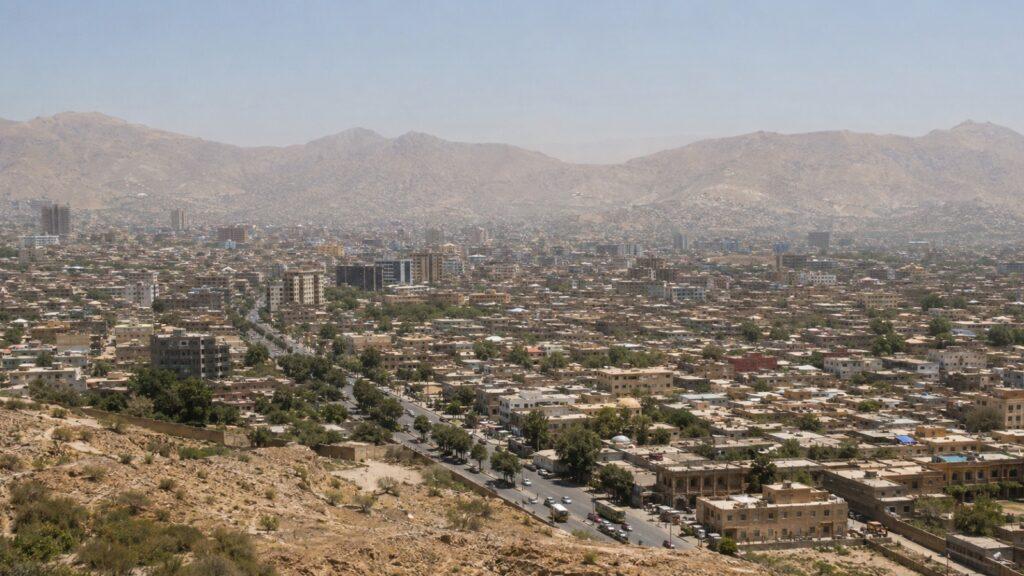
KABUL (Pajhwok): As a severe heat wave continues to affect Kabul and several provinces across Afghanistan, temperatures in some areas have exceeded 45 degrees Celsius. Doctors have warned of increased risks of heatstroke and dehydration, while environmental experts say climate change and the loss of green spaces are contributing to the worsening situation
The National Disaster Management Authority of the Islamic Emirate of Afghanistan issued a warning on its X page, stating that unusually high temperatures exceeding 45 degrees Celsius were expected in the northern and western parts of the country from July 17 to 22
The authority said the heat wave would affect the provinces of Balkh, Jawzjan, Farah, Nimroz, and Helmand
The Ministry of Public Health (MoPH), on Monday, shared a health advisory image on X, stating: “Do not expose your children to direct sunlight for a long time, as it may cause heatstroke.”
The World Health Organization (WHO) also shared a message on its X page addressing Afghan citizens, saying: “Temperatures in Afghanistan are rising; protect yourself and your family from extreme heat.”
The organization advised people to avoid strenuous activities during periods of extreme heat, never leave children inside parked vehicles, spend one to two hours daily in cool places, use sunglasses or wide-brimmed hats, drink water frequently, and wear light and loose clothing
In this report, Pajhwok Afghan News spoke with doctors, environmental experts, and Kabul residents to examine the causes of rising temperatures, their impacts on public health, and ways to prevent heat-related risks
Extreme heat: Kabul residents describe days under the scorching sun
It is one o’clock in the afternoon. The streets of Kabul appear quieter than usual. Workers continue their activities under the scorching sun, while cold-water sellers are receiving more customers
Ahmad Saleh, a vegetable seller who operates a handcart, wiped sweat from his face with a cloth and told Pajhwok: “This year, compared to previous years, the weather is much hotter. If vegetables are not sold in one day, they become spoiled the next day. We ourselves have become completely exhausted.”
He said he drinks water regularly to prevent dehydration
Meanwhile, Sosan Oriakhil, a resident of Kart-i-Parwan in Kabul city, said that due to the intense heat, she and several members of her family have suffered from heatstroke multiple times, forcing her to reduce outdoor activities
She added that in some countries, advanced cooling facilities such as water-spraying systems are provided for citizens, and she hopes similar measures will one day be introduced in Afghanistan, particularly in Kabul
She said drinking cold water, taking cold showers, and staying in cool environments are among the ways to reduce the effects of extreme heat
She also pointed to frequent power outages as another challenge facing Kabul residents during these hot days
Zahra Hamidi, a resident of Third Street in Taimani Project, Kabul, also complained about increased power cuts during the hot summer days
She said that to protect her family from excessive heat, she prepares lemon drinks, serves watermelon, and encourages family members to drink more water
Meanwhile, Sahab Sarwari, a resident of Khair Khana area in Kabul city, said temperatures have increased significantly in recent days
He added: “Our school exams are being held these days, and taking exams in such hot weather is very difficult.”
Water seller: I sell several cartons of water every day
Ahmad Khalid, a 12-year-old boy who keeps mineral water bottles in a bucket filled with ice and sells them beside the road, told Pajhwok: “Since the weather became hotter, sales have increased significantly. Previously, we sold only one or two cartons a day, but these days we sell more than five cartons by evening.”
He said that during hot days, besides drinking water, he eats more ice cream to protect himself from heatstroke
Doctors warn: Extreme heat can threaten public health
Dr. Sayed Farid Shah Rafiei, an internal medicine specialist at Wazir Mohammad Akbar Khan Hospital, told Pajhwok that to prevent heat-related illnesses, people should avoid leaving their homes between 10 a.m. and 4 p.m., unless absolutely necessary
According to him, those who must go outside should use umbrellas, hats, or other forms of shade, wear sunglasses and thin, light-colored clothing, and drink sufficient amounts of water
He explained that the body loses water and salt through sweating, and dehydration can lead to heatstroke
He said children, pregnant women, elderly people, and individuals suffering from chronic illnesses such as diabetes, cancer, and kidney disease are at greater risk
According to Rafiei, dry skin and mouth, rapid heartbeat, shortness of breath, headache, and, in severe cases, unconsciousness and coma are among the symptoms of heatstroke
He emphasized that in cases of heatstroke, the affected person should immediately be moved to a cooler place, their feet should be elevated, and cold water or ice should be applied to the forehead, neck, and chest. If the person is able to drink, they should consume cold fluids; otherwise, they should be transferred to a health facility as soon as possible
Rafiei advised people to drink two to three liters of water daily, while those exposed to direct sunlight for extended periods should consume three to five liters
He also recommended consuming water-rich fruits and vegetables such as watermelon, grapes, apples, cucumbers, and spinach, while avoiding excessive intake of carbonated drinks, sugary beverages, energy drinks, fried foods, salt, and sweets to reduce the risk of dehydration
Dr. Faridullah Omari, an infectious disease specialist at Kabul’s National and Specialized Infectious Disease Hospital, also provided similar recommendations
He said people who are forced to work under direct sunlight should use hats or wet cloths, drink sufficient amounts of clean or boiled water, and avoid soft drinks and coffee
He added that high fever, vomiting, weakness, dizziness, and headaches are symptoms of heatstroke. In such cases, after moving the person to a cool place and lowering their body temperature, self-medication should be avoided and the patient should be taken to a health facility for treatment
Heat Wave in Afghanistan: Climate change and human mpact
Najibullah Sadid, an environmental expert, said the current heat wave in Afghanistan is partly a natural phenomenon and partly the result of human activities
According to him, heat waves naturally occur due to the formation of heat domes caused by high atmospheric pressure in the upper layers of the atmosphere. This process causes air to descend toward the Earth’s surface, releasing thermal energy and increasing temperatures near the ground
He added that climate change has intensified this process because the Earth, particularly Central Asia, has experienced greater temperature increases in recent years
According to Sadid, the human contribution to the problem is linked to the destruction of green spaces and the reduction of water bodies in urban areas. These areas previously helped reduce temperatures by absorbing solar energy and releasing moisture through evaporation
He cited Kabul’s Kol-i-Hashmat Khan as an example, saying the area no longer exists in the same condition as it did in the past
He added that vegetation has disappeared in many parts of Kabul, while large areas have been covered with concrete and asphalt. Combined with rapid construction, this has contributed to higher temperatures felt by residents across the city
He further explained that when heat waves are accompanied by humidity, the risk of heat-related illnesses increases and daily activities become more difficult. According to him, many countries have shifted some work activities to nighttime hours because of extreme heat
Sadid said extreme heat affects not only human health but also agriculture, water re and drying forests could increase the risk of wildfires
He emphasized that individuals can reduce heat-related risks by limiting outdoor activities during peak heat hours, using umbrellas, protective coverings, and sunscreen, and increasing water intake
At a broader level, he said improving vegetation coverage, creating green spaces, expanding water areas, and planting trees are effective measures to reduce the impact of heat waves
He noted that heat waves have become more frequent in Afghanistan and many parts of the world in recent years, while environmental changes in Afghanistan have intensified their effects. In the past, greater vegetation coverage, green areas, wetlands, and lakes helped reduce the severity of such events
Acute diarrhea among children: More than 644,000 cases recorded this year
Dr. Sharafat Zaman, spokesperson for the Ministry of Public Health, told Pajhwok that 644,812 children under the age of five have suffered from acute diarrhea during the current year
He said some diseases are linked to seasonal changes and their prevalence increases or decreases depending on the time of year
Zaman noted that with the arrival of the hot season, cases of acute diarrhea increase, particularly in warmer provinces
He said cases of acute diarrhea have increased compared to last year, identifying limited access to food and clean drinking water among earthquake- and flood-affected communities as major contributing factors
He added that all patients have received treatment and that the Ministry of Public Health has not faced major challenges in managing the situation
