


Key points
- Arts participation builds emotional and social resilience.
- Trauma-informed arts programs are an effective addition to clinical care.
- Creative engagement can strengthen mental well-being, social connection, and long-term trauma recovery.
“Path with Art gave me my life back. My spark. My love for life.”
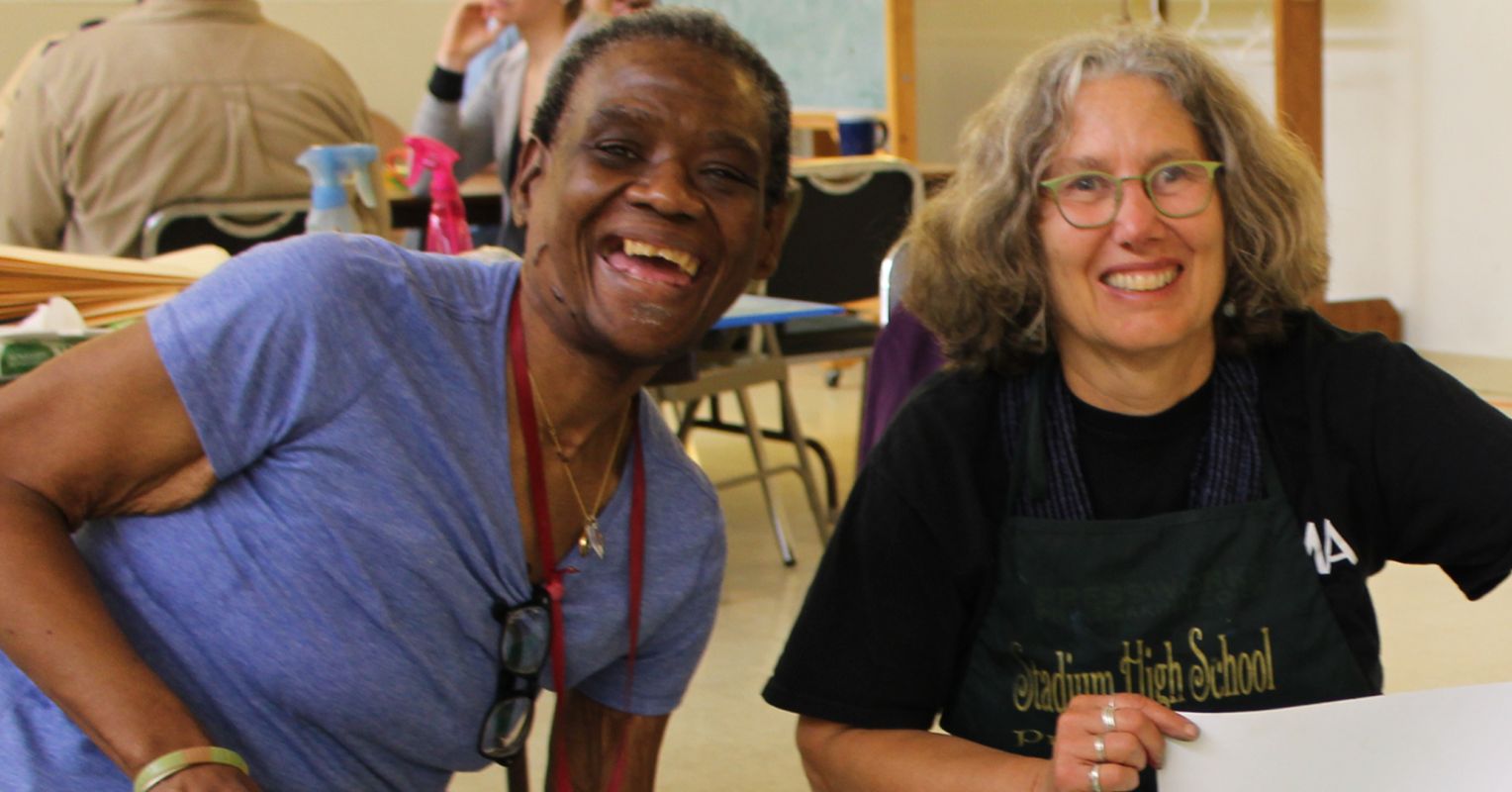
For one participant of Path with Art (PwA), a Seattle-based nonprofit organization that provides free community arts programming for individuals affected by trauma, these words capture the power of community arts engagement. Rooted in the understanding that art is a fundamental human need, PwA provides free community arts programming, partnering with hospitals, shelters, and recovery organizations to make creative expression accessible to populations that are often considered “hard to reach.” These include people recovering from trauma such as homelessness, domestic violence, substance use disorders, and post-traumaticstress.
Through storytelling, music, dance, poetry, and other creative practices, PwA, like community-based arts programs across the country, helps participants make meaning, build connection, and foster healing. Stories like these are common among participants, teaching artists, and community leaders who have long witnessed the transformation power of community-based programs. However, despite a growing body of research that has demonstrated the benefit of arts engagement, community arts programs remain understudied in the literature.
To help address this gap, the International Arts + Mind Lab at Johns Hopkins University partnered with Path with Art to examine the impact of community arts participation on mental wellbeing, social connectedness, and self-efficacy. These psychosocial outcomes were chosen as they have been shown to contribute to the trauma recovery processes. By combining both quantitative and qualitative methods, the study sought to measure not only outcomes but also to better understand the lived experience of participants and the mechanisms through which creative engagement may contribute to healing and recovery.
This 12-month study collected data from PwA participants after their 8-week art classes. The data collected included pre- and post-validated measures as well as an exit survey with open-ended questions to gain additional insight into their experiences in the PwA programs
Study findings
The findings were positive and striking: More than 90 percent of participants reported increased self-efficacy—the belief that they can accomplish goals despite adversity. Nearly 90 percent self-reported improvements in <a href="https://lumeamara.online/?p=4638" title="Yas Queen! Drag and Trans Women’s Mental Health“>mental health. More than 80 percent reported feeling less lonely, and nearly seven in ten said they made new friends. In addition, the three validated mental health survey tools found similar outcomes. They measured a significant increase in well-being, an increase in self-efficacy, and a significant reduction in loneliness.
Participants viewed the PwA classes as a way to alleviate social isolation while also providing a safe, inclusive, and diverse community. They also emphasized how making art helped them manage stress and other trauma-related symptoms. Making art within a structured and communal environment also helped participants become more optimistic, hopeful, and positive. Participating in PwA classes also helped individuals discover and develop their own creative capacities, self-confidence, self-compassion, and self-awareness in an environment that encourages collaboration and experimentation.
Specific to the low-to-no income, trauma-impacted populations that were studied, PwA’s teacher-led classes provided participants with a unique sense of structure, dependability, stability, and support. Participants described the classes as a lifeline that helped them reconnect with meaning, motivation, and self-worth as well as helping them process their complex emotions
Where do we go from here?
By gaining a deeper understanding of how arts programming influences trauma recovery, mental well-being, and social connectedness, community-based arts can become a holistic approach to support trauma recovery and be implemented more widely into our current health care systems as a complement to standard care
Healing from trauma requires rebuilding trust, identity, purpose and connection. Art in a trauma-informed setting offers a uniquely powerful way to support recovery and rebuilding. This study provides important evidence and support for community-based arts programs that can be carried out in tandem with clinical, trauma-informed services
References
Bartleet B., Boydell K., Walton J., Young P. (2023). Help is on its way: Exploring the mental health and wellbeing outcomes of a massed community choir program. Arts & Health, 15(3), 257–274. https://doi.org/10.1080/17533015.2022.2094432
Crone D. M., O’Connell E. E., Tyson P. J., Clark S. F., Opher S., James D. V. B. (2013). “Art Lift” intervention to improve mental well-being: An observational study from UK general practice. International Journal of Mental Health Nursing, 22(3), 279–286. https://doi.org/10.1111/j.1447-0349.2012.00862.x
Ragsdale, K., Ng, T. W. C., Tiedemann, A., Manik, C., & Magsamen, S. (2026). Path With Art: Exploring the Impact of Community Arts Programming on Trauma Recovery. Health Promotion Practice. https://doi.org/10.1177/15248399261445966
