




Getty Images
Daily life is not easy for Salvatore. At 17, he weighs 170kg (26st 10lb) and struggles to walk
He can’t tie his own shoelaces and his Vespa scooter strains to bear his weight – in one week, its wheels broke seven times
“He eats constantly,” says his mother Anna
Salvatore is among a growing number of Italian children and teenagers living with obesity. The problem is particularly acute in the south: in parts of the Campania region, more than 40% of eight and nine-year-olds are overweight. The town of Ponticelli, on the outskirts of Naples, has earned the unen
It is a striking development in a country long regarded as the spiritual home of the Mediterranean diet. Yet today, Italian children are among the most overweight in Europe, according to the World <a href="https://lumeamara.online/?p=4666" title="Kabul, Tashkent discuss health sector cooperation”>Health Organization (WHO)
Salvatore is waiting for life-changing surgery at the Betania Hospital in Ponticelli, where Dr Sonja Chiappetta has spent 15 years treating patients with severe obesity
Until recently, she says, most of her patients were in their fifties. “Now I see those same patients when they’re teenagers, as young as 16. They are getting younger, and it’s frightening.”
The surgery she carries out removes up to 90% of the stomach – meaning people are unable to eat large quantities of food. Demand has risen sharply in this part of Italy
But Salvatore has been told he cannot get the operation. His weight is so excessive it makes the surgery too dangerous
Instead, Dr Chiappetta has prescribed him a GLP-1 weight-loss injection to reduce his appetite and help him lose enough weight for the operation

Getty Images
For decades, Italy was held up as a model of healthy eating
The Mediterranean diet – rich in vegetables, legumes, olive oil, whole grains and fish – became famous after US physiologist Ancel Keys and his wife, biochemist Margaret Keys, studied communities in southern Italy in the 1950s and linked their habits to remarkably low rates of heart disease
Their research transformed a regional way of eating into one of the world’s best-known diets; a blueprint for healthy living
But the Italy that inspired those studies no longer exists
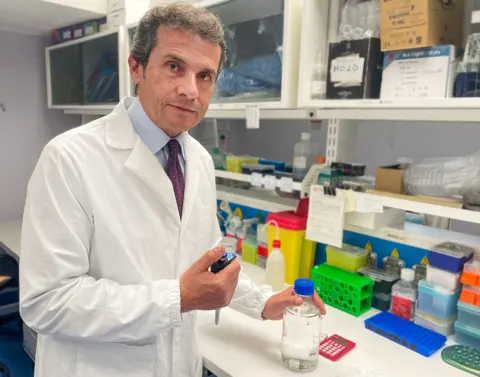
“The traditional Mediterranean diet has been lost,” says Doctor Valter Longo, director of the Longevity Institute at the University of Southern California. “Only 10% of Italians really follow it.”
Dr Longo sums up the modern Italian diet with what he calls the “five Ps”: pizza, pasta, potatoes, protein and pane – the Italian word for bread

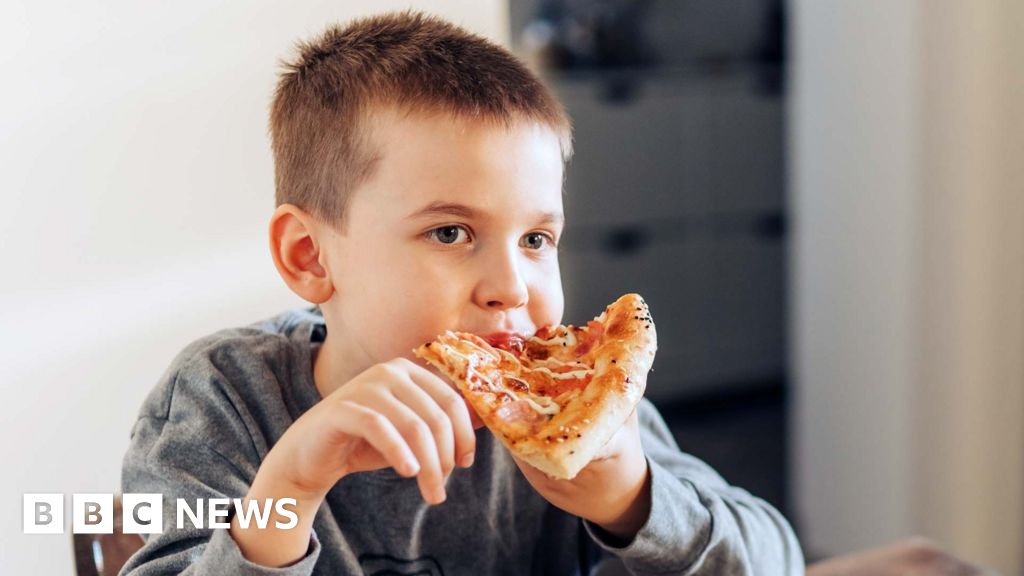
The transformation is visible everywhere: from supermarket shelves stocked with ultra-processed foods to pizzerias selling slices piled high with chips, sausages and fried snacks
Doctor Roberto Berni Canani, a paediatrician and obesity specialist at the Federico II University in Naples, sees the consequences every day
“I’ve treated children who are just two or three years old and already weigh 25kg,” he says
He says most parents don’t recognise their children are overweight. “They come to see me because of other problems – a cough, stomach pain, diarrhoea. They don’t realise their child’s weight is what’s causing it.”
Ten-year-old Francesca has a persistent cough and struggles to swallow. Doctors suspect an inflammatory condition of the oesophagus
She weighs 60kg (9st 6lb) – but that’s not why her parents have sought medical help
Francesca says she eats bread with Nutella for breakfast, a chocolate-filled sponge cake as a snack, pasta with lentils for lunch and usually chicken for dinner
“But she doesn’t eat vegetables,” her mother, Carmen, interjects. “I put them in front of her, but she won’t touch them.”
Francesca’s parents insist she is active. She does artistic gymnastics and Latin dance, and doesn’t get tired. They have never considered her weight as a problem
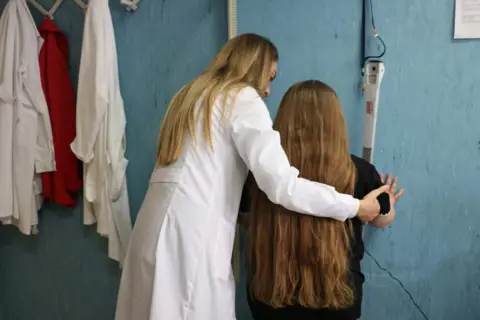
Dr Berni Canani reaches a different conclusion
The problem, he explains, is the overall pattern rather than any single meal. Small, calorie-dense foods consumed throughout the day, sugary drinks, too few fruit and vegetables and little understanding of how these habits accumulate over time
“This is a very good mother,” he says. “A very good father. They simply don’t recognise the importance of diet quality and body weight.”
And in Italy, encouraging children to be more active can be surprisingly difficult
Many schools are housed in beautiful old palazzi – they were never designed with modern physical education in mind
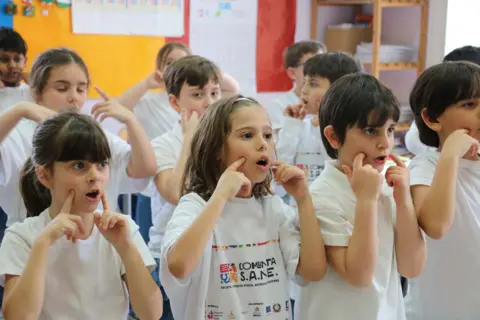
The Ugo Foscolo primary school is no exception. Its gym has barely enough space for a class of children to move around
“I have one pupil I’m particularly concerned about,” says Francesca Pecce, who teaches at the school. “He’s 10 years old and weighs around 60 kilograms.”
She has tried raising the issue with his mother
“But she is not worried,” Pecce says. “In Neapolitan culture, if a child is a little chubby with rosy cheeks, people often think they’re healthy.”
Schools, she believes, can help change that, especially if children “take home” lessons about healthy eating
“Sometimes it’s easier to educate the parents through their children than the other way round.”
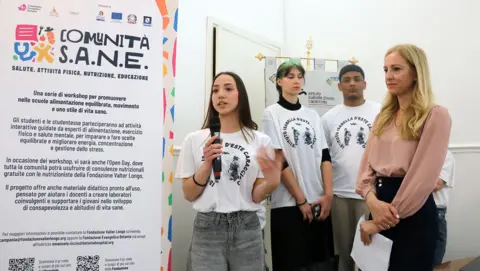
At a secondary school in Naples, students file into a classroom for a nutrition workshop run by the Valter Longo Foundation
The programme is part of a regional initiative to tackle childhood obesity. Over the coming months, more than 17,000 students across 25 schools will take part. Families will receive support to help change eating habits at home
But not all of the students are convinced
Eighteen-year-old Ciro doubts that information alone will change behaviour
“My classmates already know what’s healthy,” he says. “They just don’t care.”
Carmen, 19, is more optimistic
“I thought it was actually really helpful because teenagers today are really big into junk food, and don’t exercise as much.”
She says the problem is that temptation is everywhere. Even foods traditionally associated with Italy have changed
“When we go out for pizza, people don’t just order a Margherita. They put chips, sausages and fried food on top.”
Add to that the centuries-old cliches of Italian mothers and grandmothers showing their love through food, and it’s a perfect storm
Obesity is an “escalating global epidemic”, says the WHO. More than one billion people worldwide are now obese, and childhood obesity has quadrupled since 1990
In 2025, Italy became the first country to pass a national law recognising obesity as a chronic, progressive and relapsing disease
Rather than treating obesity simply as the result of poor choices, the country’s new law recognises it as a chronic disease influenced by biology, environment and social circumstances
The Campania region has become a testing ground for putting that philosophy into practice, implementing a series of ambitious interventions – including a controversial trial of a “fast-mimicking diet”
Researchers are recruiting 300 overweight adolescents who will spend five days every three months on a controlled diet of 1,100 calories on day one and 770 calories on following four days – so restrictive it resembles a fast
The goal is to trigger a “metabolic reset”
“Fasting, or controlled deprivation of food, is linked to a longer and healthier lifespan,” says Dr Longo, who has spent three decades studying the effects of fasting
But not all obesity specialists are persuaded that fasting is the right approach for children
Paediatrician Berni Canani believes the evidence for fasting-mimicking diets in children is still too limited to be recommended in Italy’s clinical guidelines
He also worries restrictive diets could carry psychological risks for adolescents, whose relationship with food is still developing
“I fear that imposing food restrictions on teenagers could increase the risk of eating disorders, anorexia and body dysmorphia,” he says
Meanwhile, Salvatore hopes to have surgery in the summer, so that, for the first time in years, he can wear a swimming costume without feeling self-conscious
But he is not alone. Across Italy, a generation of children is growing up increasingly removed from the Mediterranean diet that once made the country famous
.
More weekend picks
Italy
Obesity
Diet & nutrition
Food
Health
