


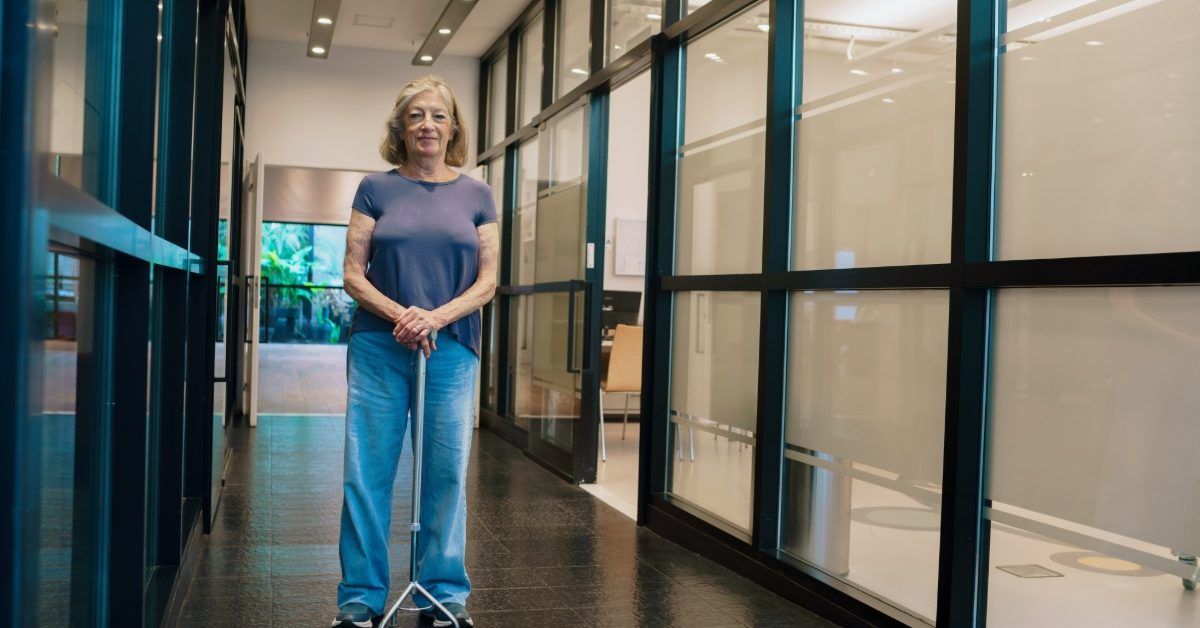

- Updated guidance suggests that stroke rehabilitation should begin as soon as a person is medically stable, ideally within 48 hours, although moderate- to high-intensity exercise should be avoided during the first 24 hours.
- Recovery plans should also address each person’s physical, cognitive, communication, and mental health needs, with care coordinated by a multidisciplinary team.
- Monitoring and treatment of mental health should also occur alongside rehab, as individuals work toward their highest possible level of independence.
- The guidelines also advise providing support for caregivers and helping individuals address challenges that may arise from changes in independence.
Stroke represents a major health concern in the United States, with nearly 800,000
people experiencing a stroke each year. It is also the country’s fourth-leading cause
of death and a leading cause of serious, long-term disability
Rehabilitation plays an important role
in helping stroke survivors regain independence and optimize their recovery outcomes. Because a stroke can affect movement, communication, thinking, memory, and emotional health, recovery often requires more than physical therapy alone
Now, new guidelines from the American Stroke Association emphasize that stroke rehabilitation should begin as soon as a patient is medically stable, ideally within 48 hours, and should address far more than physical recovery
The 2026 Guideline for Adult Stroke Rehabilitation and Recovery
, published in the American Heart Association’s peer-reviewed journal Stroke, calls for personalized rehabilitation plans that take into account physical, cognitive, communication, and mental health needs
The guideline replaces recommendations issued in 2016
and reflects advances in stroke rehabilitation and recovery
“This guideline expands or makes new recommendations in cognition, mental health, sleep, and post-stroke fatigue, recreation and leisure,” Lorie Richards, PhD, FAHA, who chaired the guideline writing group and is an associate professor at the University of Utah and a licensed occupational therapist, told Medical News Today
“It updates recommendations in multiple other areas based on the evidence literature that was published between the last guideline and the current one,” she said
Stroke rehabilitation should start early
Stroke can affect movement, strength, speech, memory, thinking, mood, and the ability to perform everyday activities. These changes can make tasks such as walking, eating, dressing, bathing, working, driving, and socializing more difficult
The new guideline recommends that every person who has a stroke receive an individualized assessment and begin rehabilitation during their hospital stay once they are medically stable, ideally within 48 hours of the stroke
However, early rehabilitation does not mean immediately undertaking strenuous therapy. The guideline advises against moderate- to high-intensity exercise and task practice during the first 24 hours after a stroke
In addition to starting rehabilitation early, the guideline emphasizes that recovery should be personalized, with the goal of helping survivors achieve as much independence as possible while improving their quality of life
“There is strong evidence that rehabilitation should start early, both in animal models of stroke and in humans with stroke,” Richards emphasized to MNT
Why early rehab is important
“Multiple studies have shown better outcomes at 3 or more months in groups that were mobilized earlier. This is thought to be due to the fact that after a stroke, genes for neuroplasticity are turned on. These genes stay turned on, enhancing neuroplasticity, for 1 to 3 months making the brain more plastic than before the stroke – so easier to learn and recover. Early therapy takes advantage of this enhanced neural milieu.” — Lorie Richards, PhD, FAHA
Richards also stressed the importance of the first 48 hours after a stroke
“While all rehab should start early, it’s really important to have early mobilization. This means a structured program of sitting up in bed, moving to sitting at the side of the bed, standing and walking, with an emphasis on standing and walking as soon within this program as possible – between 24 to 48 hours after stroke,” she said
“However, a few studies have found that people mobilized earlier than 24 hours after stroke are less likely
to have a good outcome compared to those mobilized between 24 and 48 hours,” she noted
A multidisciplinary approach can address multiple needs
The guideline also recommends coordinated care involving a range of health professionals
Depending on an individual’s needs, this may involve a multidisciplinary team including neurologists, rehabilitation nurses, occupational therapists, physical therapists, speech-language pathologists, social workers, psychologists, and recreational therapists
This approach recognizes that everyday activities often require multiple abilities at once
For example, returning to work may involve physical skills alongside communication, memory, concentration, emotional adjustment, and confidence
Rehabilitation can take place in different settings depending on the severity of the stroke and the person’s needs. Some people may return home and receive outpatient therapy, while others may require inpatient rehabilitation, a skilled nursing facility, or a long-term care hospital. In some cases, telehealth may also help expand access to rehabilitation services
Mental health is part of stroke recovery
The guideline emphasizes that physical rehabilitation is only one component of recovery, and highlights the importance of mental health
Evidence suggests that roughly 1 in 3
people may experience depression after a stroke, and anxiety can occur in up to a quarter of patients following a stroke. Both can make it harder for someone to participate in rehabilitation or regain independence
The guideline highlights the importance of adjusting to changes in relationships, independence, sleep, pain, sexual function, employment, parenting, and future plans
Regular screening for mental health concerns can help identify problems early and connect individuals with appropriate support
“The goal of rehabilitation is to return people to a quality life – to get them back to being able to perform or engage in the life roles and activities that they want or need to do,” Richards added. “Being able to be engaged in meaningful roles and activities are important for having a quality of life. Therefore, it’s important to address all the areas that have been disrupted by stroke.”
Sleep key to recovery
“Sleep is important for learning and for mental health and resilience. If people get poor or not enough good quality life, it interferes with their ability to recover, it can interfere with their cognition, and it usually makes people not very happy. Therefore, sleep needs to be addressed not only for helping people feel better, but also for the ability to benefit maximally from the rehabilitation program.”— Lorie Richards, PhD, FAHA
“No one wants to be in pain. It interferes with full engagement in rehabilitation and also engagement in activities after rehabilitation. It reduces quality of life. So, it should be addressed,” Richards said
Richards also touched on how stroke affects relationships and the well-being surrounding those dynamics
“Sexuality is an important part of human life. The role changes that partners/spouses experience can also impact sexuality. Many people with stroke and their partners/spouses are often reluctant to bring up these issues, but they can reduce quality of life. Therefore, it is important that they are addressed,” she noted
“People’s relationships often change after a stroke. Spouses/partners become caregivers, a parent may not be able to take care of their child. A child may have to become a caregiver. These are hard transitions that can really affect mental health and quality of life. We need to help people adapt their relationships so that they are the most satisfactory they can be,” she told MNT
Stroke recovery may continue for years
The guideline also notes there is no universal endpoint for stroke rehabilitation. While some people regain their independence, others may experience lasting limitations and require continuing support
As such, the guideline recommends ongoing reassessment of rehabilitation goals, progress, and functional abilities. Over time, treatment plans may need to change as a person’s needs evolve
The need for long-term support is particularly relevant as more people are generally living longer after a stroke than they did in the past
Evidence also highlights an increase in the incidence of stroke at younger ages, making issues such as returning to employment and caring for young children important parts of rehabilitation planning
Caregivers also need support
Stroke recovery can also have an impact beyond the individual. The American Stroke Association estimates that about 2.7 million people
in the U.S. provide care to someone who has had a stroke, which can place substantial demands on family caregivers
Caregivers may help with everyday activities, household responsibilities, and physical needs, but they can also experience difficulties with their mental health. For example, a 2025 systematic review and meta-analysis found that almost 44% experienced symptoms of depression
Therefore, the new recommendations emphasize involving caregivers in rehabilitation planning and education and providing them with appropriate support throughout the recovery process
“It’s important to include the family in therapies as early as possible and for the team to repeat stroke education materials over time,” Richards emphasized to MNT
“This is because the family is in crisis early on, and the brain does not learn well when people are in crisis. So information needs to be repeated,” she said
“The education should be active – have families practice the physical help they may have to give – use teach back techniques where you have the family tell/show the therapist what had been presented,” she noted
“They can make sure that families have lists of retner and person with stroke in dyadic care to bolster satisfactory relationships and resilience. Including families this way, allows them to see how much recovery is happening and where the person is at discharge.”— Lorie Richards, PhD, FAHA
