



Getting Images
Mothers living in Suffolk need greater mental health support both during and after pregnancy, a report said
The Mental Health Needs Assessment (MHNAS) 2026 for Suffolk, which was published in June and discussed by Suffolk County Council’s Health and Wellbeing Board on Wednesday, found that one in four women giving birth in the county will experience perinatal mental health issues
New mums told the BBC about their perinatal experiences, such as feeling they should be happy when they were not and how sleep deprivation was “a form of torture”
A spokesperson for NHS Norfolk and Suffolk Integrated Care Board (ICB) said: “We recognise that perinatal mental health difficulties can affect many people and that early support is vital.”
Vikki Irwin/BBC
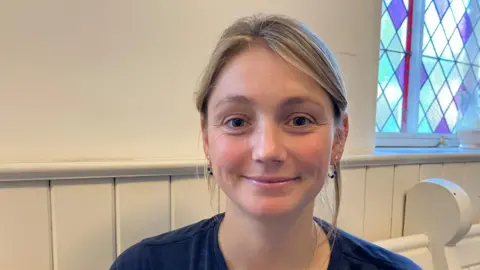
Tish Davies, 29, often takes her six-week-old baby and toddler to Little Hands, a group for parents, infants and preschool children which meets at Quay Church in Woodbridge, Suffolk
“I think the first time around I thought [having a baby] was going to be easy,” she said
“Everyone kept telling me how happy I must be and you start convincing yourself you are happy when you’re so sleep deprived and maybe don’t feel like you can say, ‘Actually I’m finding this quite hard’
“You feel like you should feel lucky that you could have a child.”
The 29-year-old said she did not find the first few weeks post-birth the most challenging, but rather five months later when her sleep deprivation was at its worst
“I definitely did struggle more [then] and I felt like I didn’t have a huge amount of support.”
She did refer herself to services nancy she was not able to make the appointment
“It had been such a long wait to get the appointment that I didn’t think I needed it anymore,” she said
Perinatal mental health services are available from pregnancy to up to two years after birth
Vikki Irwin/BBC
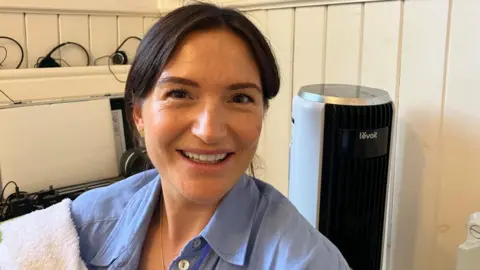
Shimaari Milton’s second child is just three weeks old and said she feels more education about perinatal mental health is needed for mothers
“I think second time round is a little bit different because you know how to prepare yourself a lot better,” she said
“There wasn’t any extra postpartum mental health help between my first or my second – I think there should be.”
She felt new mothers needed to be more informed if their mood starts to change
“It’s not just the baby blues a few weeks later – it can go for a lot longer, even the first year.”
She added: “Sleep deprivation is a form of torture and I think that is a massive thing that impacts your mental health.”
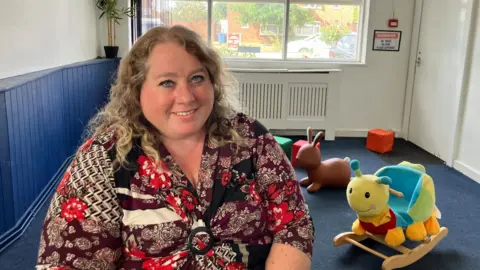
Marina Barnes, who moved to Woodbridge a year ago, attends Little Hands with her youngest toddler. She said: “I did struggle because we’ve moved quite a bit whilst the children have been young. I found it very isolating
“At times you are just on your own thinking, how do I do this? I try not to beat myself up too much about the hard days. But there are a lot.”
She added that talking about your feelings as a mother can be tricky
“You don’t want to feel like you can’t manage or cope. Everyone talking about it makes you think, oh it’s OK, I’m not the odd one out,” she said
Vikki Irwin/BBC
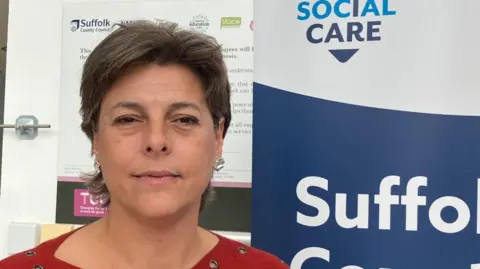
Sarah Battistetti has been a childcare provider for the past 16 years for children from birth to 14. She also runs the Flying Horse Café and community hub in Whitehouse, Ipswich
She said: “I’ve had hundreds of mums and dads come to me and there’s definitely consistent things.”
“I’ve had extremely anxious mums to the point they’ve had to be medicated. I’ve had new mums with just natural worries but that’s obviously caused other issues, tears, lots of emotion and depression.”
Battistetti has a teenager and says there is less face-to-face support for new mums today than there was when her child was born
“It’s not about signposting them to something online or getting them a leaflet, it’s actually sitting down and talking with them in a relaxed environment where they can just offload. It’s not necessarily needing a doctor or medicine, it’s just talking,” she said
Vikki Irwin/BBC
The MHNAS report was put together by the council’s public health team, ICB and Norfolk and Suffolk Mental Health Trust (NSFT)
Its report said Suffolk’s estimated prevalence rate for perinatal mental health in 2019 – the most recent available data- was 26.2%. The average for England was 25.8%
Anna Crispe, a consultant in public health and assistant director for knowledge intelligence and evidence at the council, worked on the report and said about one in four women would experience some mental ill health during pregnancy or up until two years after their baby had been born
“Roughly 6,500 women in Suffolk give birth every year, so it’s not an inconsiderable number of people being affected,” she said
One in five adults in England have a mental health condition
“It’s not vastly higher for [perinatal] women, but it is a bit higher and that’s important,” she said
The MHNAS said access to specialist perinatal mental health services was “limited relative to estimated need”
It suggested that “a proportion of women with moderate to severe conditions may not be receiving timely, specialist care”
However Crispe said mandated health visitor targets were being met by the council
“The mental health of mum helps to support the mental health of the baby, of the family as a whole. It’s really important for good family outcomes, so this is why we’re interested in this issue,” she added
Contributed
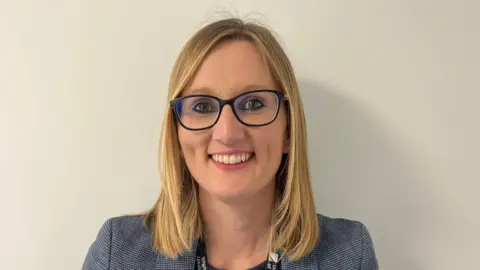
Becky Sawyer, a midwife and the head of midwifery and public health at the University of Suffolk, said a wide range of mental health conditions could develop during pregnancy or after birth, such as anxiety, depression and post-traumatic stress disorder
Some people could also experience obsessive compulsive disorder (OCD), eating disorders, or other conditions such as psychosis and postpartum psychosis
Recognising the signs, she said, was very important
“For some women, they may have already entered their pregnancy knowing that they have had challenges with their mental health so they may be familiar symptoms
“But for some women, it may be the first time that they have ever experienced [these] challenges. And sometimes, it may be partners or close family members that notice that change in them more than themselves.”
Sawyer said early access to perinatal healthcare was key
“That’s why we try and encourage women to book for their pregnancy by 10 weeks, so that we can look at whether there are specific care pathways [for them]”
If a woman was experiencing symptoms, Sawyer encouraged them to seek help from either their midwife, GP or health visitor
Reiterating its support for parents, the NHS Norfolk and Suffolk ICB said it had identified opportunities to improve how perinatal care was accessed
“We have strengthened referral processes and are investing in perinatal community mental health services and specialist parent-infant support across Norfolk and Suffolk
“These improvements will help more people access timely assessment, treatment and psychological support, while strengthening support for families affected by birth trauma, pregnancy loss and baby loss
“We strongly encourage anyone experiencing perinatal mental health difficulties to speak to their care team and ask for support.”
- If you have been affected by the topic discussed in this article, support is available via theBBC Action Line.
Do you have a story suggestion for Suffolk? Contact us below
Follow Suffolk news onBBC Sounds,,andX
More stories
Related links
Mental health
Health
Pregnancy
