


A child does not have to go hungry to be malnourished
In Pakistan, a child may eat every day and still lack the protein, micronutrients, clean water and healthcare needed for healthy growth. A mother may have enough food but enter pregnancy already anaemic or undernourished. A family may have food on the table but not enough money to make that food nutritious
That is the quieter face of Pakistan’s malnutrition crisis
Around four in ten children under five are stunted. The consequences are not confined to childhood. Poor nutrition can affect learning, productivity, household incomes and the country’s economic future
But there is an important question hidden inside Pakistan’s national numbers: What can we learn from the places where progress has been made?
One answer comes from Khyber Pakhtunkhwa
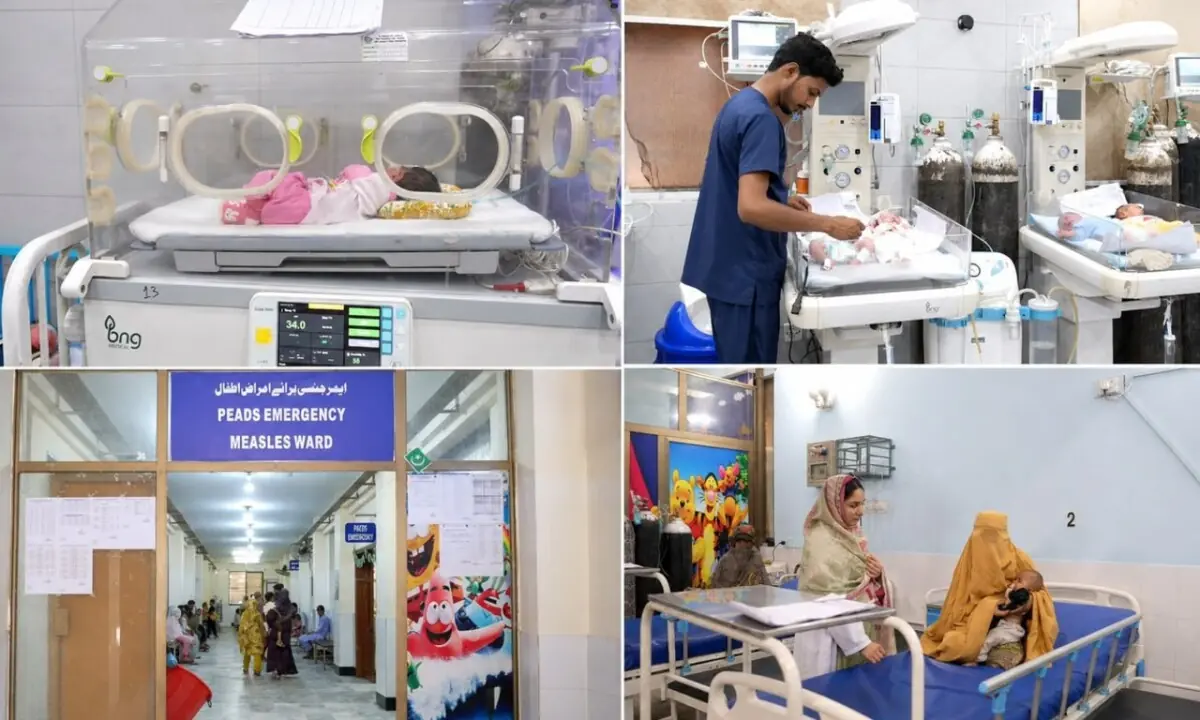
Research published in the American Journal of Clinical Nutrition in 2025 found that KP recorded the largest decline in stunting among Pakistan’s provinces between 2011 and 2018. The improvement was associated with wider socioeconomic changes, social protection and investments in health and nutrition — not with a single miracle programme
That distinction may be the most important part of the story
KP has not solved malnutrition. But it has shown that the trajectory can change
The first 1,000 days
At the centre of the province’s approach is the first 1,000 days — from conception through a child’s second birthday
It is a narrow window, but one with consequences that can last a lifetime. Maternal nutrition, antenatal care, breastfeeding, complementary feeding, immunisation, sanitation and protection from infection all shape a child’s development during this period
KP has established a Nutrition Cell at the Directorate General Health Services to coordinate nutrition interventions
Its programmes include breastfeeding promotion through the Baby Friendly Hospital Initiative and Baby Friendly Community Initiative, with 27 breastfeeding rooms and day-care centres established in hospitals and other institutions
The province is also providing multi-micronutrient supplementation for mothers, weekly iron and folic acid supplementation for adolescent girls, and treatment for children with severe acute malnutrition through Community Management of Acute Malnutrition
Kangaroo Mother Care, nutrition training for Lady Health Workers and the integration of nutrition into medical, nursing and allied health curricula are also part of the approach
The significance is bigger than the list itself
It reflects a recognition that a child’s nutritional health begins long before that child arrives at a hospital
Nutrition is not just a health problem
A doctor can treat a malnourished child
But a doctor cannot lower the price of food
A health department can advise families about hygiene, but it cannot provide clean water to every household
An agricultural programme can increase food production, but if the food is unaffordable or lacks nutritional diversity, production alone will not solve the problem
This is why nutrition is ultimately a test of government coordination
Health, agriculture, education, food, social protection, water and sanitation may be separate departments on paper. For a child, they are part of the same environment
KP’s Multi-Sectoral Integrated Nutrition Strategy, Scaling Up Nutrition initiatives and KP-SPRING — Khyber Pakhtunkhwa Stunting Reduction Integrated Nutrition Gain reflect this broader approach
The province has also integrated nutrition into wider health planning through the Integrated Health Project
When nutrition meets social protection
The connection between poverty and nutrition is impossible to ignore
It is difficult to tell a mother to provide a more diverse diet when the household cannot afford it
This is where the BISP Nashonuma Programme becomes important. The programme provides conditional cash transfers to vulnerable BISP-registered pregnant and lactating women and children under two, linking financial support with maternal and child nutrition
The idea is simple but powerful: social protection can do more than put money into a household. It can be designed to improve the health and development of the next generation
The hardest problem is reaching everyone
There is, however, a danger in celebrating provincial averages
KP’s progress has not been uniform. District-level differences remain substantial, and newly merged districts and other underserved areas can face much greater challenges than provincial figures suggest
The real test is therefore not whether the province’s average improves
It is whether improvement reaches the child living far from a functioning health facility
Whether it reaches the mother with the least purchasing power
Whether it reaches families least able to withstand another flood, drought or economic shock
That is why equity must become the next measure of progress
KP has already developed many of the building blocks: nutrition services, breastfeeding support, maternal supplementation, treatment of acute malnutrition, social protection, food fortification and multi-sectoral planning
Its food fortification programmes include Universal Salt Iodisation, wheat flour fortification and oil fortification to address micronutrient deficiencies
The province is also pursuing school-age deworming and has established an Emergency Nutrition Cluster Coordination mechanism that was activated during COVID-19 and the floods of 2022 and 2024
The challenge now is not simply to create more programmes
It is to make existing ones work better — and reach further
From announcements to outcomes
Pakistan has no shortage of nutrition strategies, campaigns and commitments
The harder task is turning them into measurable change
A mother needs more than a message telling her to “eat better.” She needs access to affordable nutritious food
A family needs more than advice about hygiene. It needs clean water
A malnourished child needs more than a clinic. That child needs a home, a diet and an environment that make healthy growth possible
For policymakers, the question is therefore becoming increasingly direct:
Are we treating malnutrition after it appears, or are we changing the conditions that produce it?
Khyber Pakhtunkhwa has made progress. It has also built a broad network of interventions that reaches from pregnancy and breastfeeding to schools, food fortification, social protection and emergency response
But the province should not claim victory
The more useful message is that progress is possible — and that the work is unfinished
The real measure of success will not be another strategy document or another announcement
It will be a child who grows normally
A mother who enters pregnancy healthier
A family that can afford nutritious food
A community with clean water
And, years later, a generation better prepared to learn, work and build the future
That is the real nutrition test for Khyber Pakhtunkhwa — and ultimately, for Pakistan
This content is produced in paid partnership with the Khyber Pakhtunkhwa (KP) government – a partner of DawnMedia’s Act for Nutrition initiative
