


Health
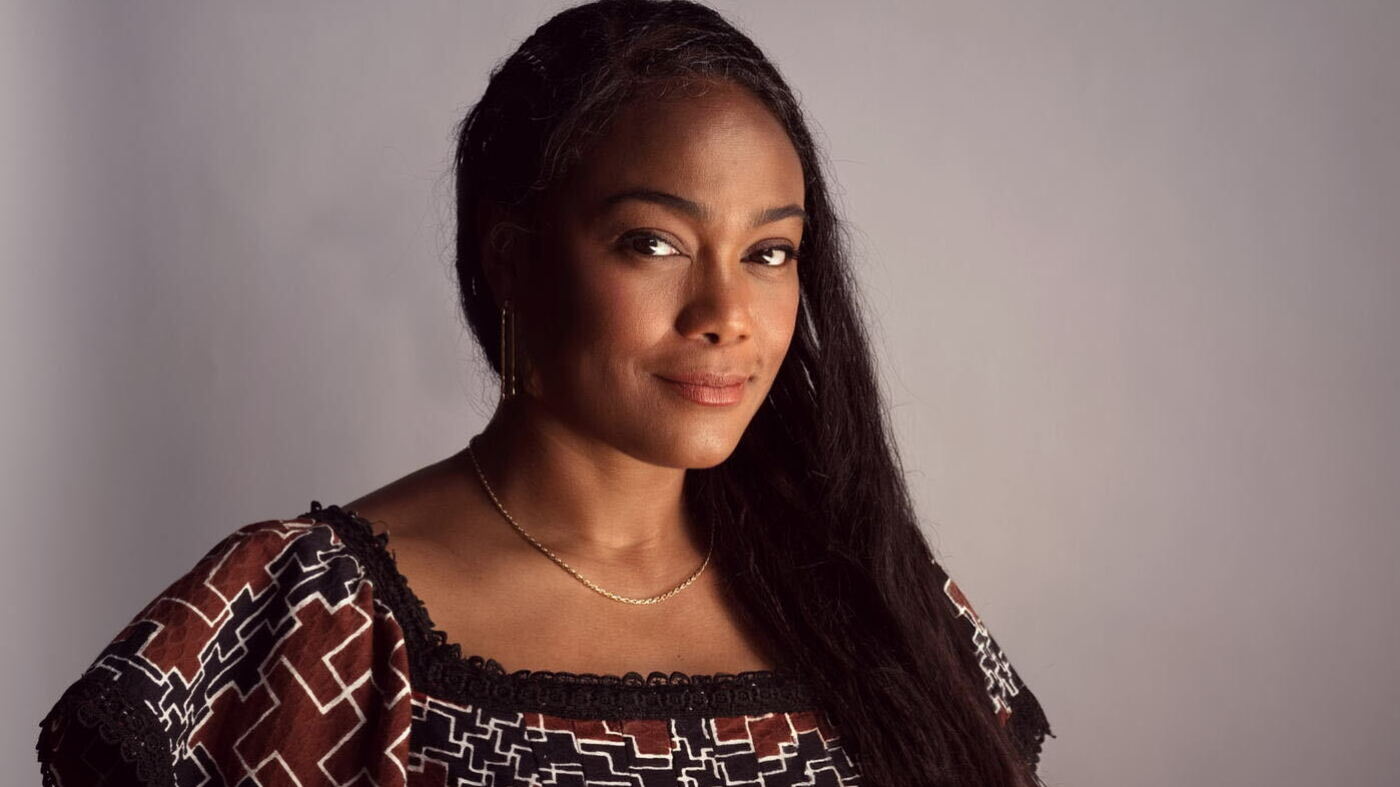
Actor Tatyana Ali is advocating for Black and Indigenous maternal health
Actor Tatyana Ali holds a Baby Yams quilt. Ali’s baby blankets raise funds and awareness for Black and Indigenous birth workers.
Manfred Baumannhide caption
toggle caption
Manfred Baumann
For stories on the science of healthy living,subscribeto NPR’s Health newsletter
Actor and singer Tatyana Ali has become an important voice in a growing movement to improve maternity health outcomes for Black and Indigenous mothers and babies by addressing systemic racism and inequity in maternity care. Ali has been calling for reproductive justice since experiencing what she calls “obstetric violence” during the delivery of her first-born son Aszi in 2016
Ali, 47, says being a mother is the most important role of her life, as she embarks on the latest chapter of her Hollywood career. She will compete on the new season of Dancing with the Starson ABC, starting Tuesday, September 15. Ali is perhaps best known for her role as the lovable Ashley Banks on the NBC sitcom The Fresh Prince of Bel-Airin the 1990s. Since then, she has acted in TV and digital series, movies and released an album.
Ali and her husband Vaughn Rasberry are raising two sons, Alejandro and Aszi. In an interview with NPR, she said it was the birth of her oldest, Aszi, that eventually made her want to speak out for Black and Indigenous mothers
Ali described having a normal pregnancy with Aszi and the days of waiting for his birth as filled with joy
“So excited and just waiting, waiting, waiting, waiting, waiting. My mother’s song when she was waiting for me was ‘cuando, cuando, cuando – when when, when? When are you coming?’ I sang that song. I thought we were prepared,” she said
In Good Health: The Matter Of Maternal Mental Health Care
But during the delivery at the hospital, Ali says her birth plan was immediately ignored. And she was physically restrained
“It went from a small group of people in the room to many people in the room screaming, yelling at me,” she said. “I was held down by about four people.”
Ali described chaos and aggressive and dismissive behavior by the doctor and nurses
“Faces, screaming, terror, panic. I needed somebody to help me,” she said
Ali says her hospital records detail the doctor using a high-risk emergency procedure that is rarely used. The Zavanelli maneuver is a last-resort procedure performed when a baby is stuck inside the birth canal. Ali says in her case, her son was already crowning when the doctor pushed him back inside of her. “After they pushed him inside me, and I remember roaring. I convulsed after that. Like my body – I can hear the bed just go buh-buh-buh-buh,” she said, describing the sound of the bed shaking. “And I was out.”
The doctor then performed an emergency c-section to deliver her son
Aszi became strong enough to go home after several days in the neonatal intensive care unit. Ali says at the time, the hospital’s head urologist told her the infant was in shock from his traumatic birth. Ali says it took some time for her to realize she had experienced “obstetric violence.” She blames systemic racism in healthcare, after hearing similar stories from other women of color
“It wasn’t just me. I was just one tiny drop in a very, very large bucket that has been overflowing for a very, very long time,” she said
Black maternal health in America
The United States is arguably the most dangerous country in the developed world to give birth to a baby, with a much higher rate of maternal deaths compared to other wealthy nations. 649 women in the U.S. died of maternal causes in 2024, according to federal data
But there is a huge disparity in the numbers: Black mothers were more than three times as likely to lose their lives from pregnancy-related causes than white women
Many in the maternity care field are concerned by stories like Ali’s and the statistics. Dr. Tamika Auguste is chair of women’s and infants’ services at MedStar Washington Hospital Center
“I can’t tell you how many Black women have said to me: ‘Hey Doc, don’t let me die,'” she said in an interview. “The poor rates in outcomes of Black maternity patients is something that rocked us to our core.”
Auguste says important work has been done in the maternal healthcare field to improve protocols and guidelines to address conditions like cardiac issues, hemorrhaging and hypertension, which are more prevalent among Black women. But she says there’s still the problem of bias
Auguste points to the dangerous misconception among some in medicine that Black patients have a higher threshold for pain. She believes it’s key for medical teams to acknowledge that disparities exist and communicate intentionally about bias to prevent it from affecting patient care
“We are very purposeful in looking at outcomes with a lens of demographics of different racial breakdown of different types of data,” said Auguste
She says those discussions are moving the needle slightly. Her hospital in Washington, D.C., employs about a dozen midwives
“Physician, midwife, doula, nurse, anesthesiologist, working together as a team. That is critical,” said Auguste
But access to maternity care is a barrier. Dr. Auguste’s own hospital recently closed one of two postpartum units, citing financial pressure. More than 500 hospitals closed maternity wards between 2010 and 2022, according to a study published in the medical research journal JAMA
Nationwide, more than half of counties don’t have hospital-based labor and delivery services, according to the non-profit organization March of Dimes. The group calls these maternity care deserts
In the South, Black and Indigenous women are more likely to live in areas without adequate access to maternity care providers People of color are also more likely to be uninsured
Healing journey
Ali says, through her own healing, she has found beautiful relationships and support in the Black and Indigenous maternal health community. She travels the country speaking at conferences and other events, sharing her personal story and talking about solutions
Healthcare
A midwife crosses ‘maternity deserts’ to make a difference for Black moms and babies
Ali founded a business called Baby Yams to fund grants to Black and Indigenous birth workers and students. Her team makes heritage baby quilts in vivid ankara and batik fabrics. Each quilt has a special name and represents protection and strength
“They’re this storytelling machine of the possibility, the hope,” explained Ali
Baby Yams donates part of the proceeds to the Birth Future Foundation, which provides grants to midwives, doulas and student birth workers
“There are solutions. The solutions exist now,” Ali said. “There are birth centers, there are midwives educating themselves, doulas going into practice.”
A midwife in Alabama is one of many birth workers who has benefited from Ali’s financial support. Nadia Gramby says she completed her licensing requirements to advance from a doula to a midwife thanks to a Birth Future Foundation scholarship funded by Ali
Gramby, 41, says her work helping families across Alabama is especially important because nearly 40% of counties in the South are maternity care deserts Gramby says her practice is an important option, especially for Black families that may not otherwise have immediate access to care
“It is an amazing joy to see families who feel safe and know that they’re seen, and they made decisions to make sure that their children are born in safe environments, where they feel comfortable, and they feel cared for and they have been educated and they are empowered,” she told NPR
Black midwives and doulas have had a rich history in African American life and communities for centuries
Midwives are medically trained to perform many of the same functions and procedures as doctors when women are having babies in low-risk situations. They deliver in hospitals alongside physicians, birth centers and in homes. They also frequently collaborate with doulas, who provide non-medical support. Research shows midwife births lead to lower rates of complications
A report released this year by March of Dimes finds midwives are critical and part of the solution to expanding access to maternity care, especially in rural and under-reequirements for physician supervision and increase reimbursement rates from Medicaid and private insurance
But some physicians and policymakers worry about the safety of giving birth outside of hospitals, especially when there’s an emergency. Midwives can’t perform surgery for example, so that can mean delays to getting emergency treatment. Some states have laws making it harder for midwives to practice
When Ali became pregnant with her second child, she and her husband searched carefully for the right midwife and found one. She says that time around, her birth plan and desires were acknowledged
“We deserve to be cared for. We deserve to have choices. We deserve to have control over our own bodies,” she said. “We are beautiful. We are deserving of loving hands.”
NPR does not offer or accept money for coverage or interviews.
Anyone who makes such an offer or request is not an NPR employee and does not represent NPR
