


Stories from the community
Health worker heroes
In conflict-hit Nigeria, military escorts help vaccinators to reach children cut off from healthcare
- 16 September 2026
- 8
min read - byJesusegun Alagbe
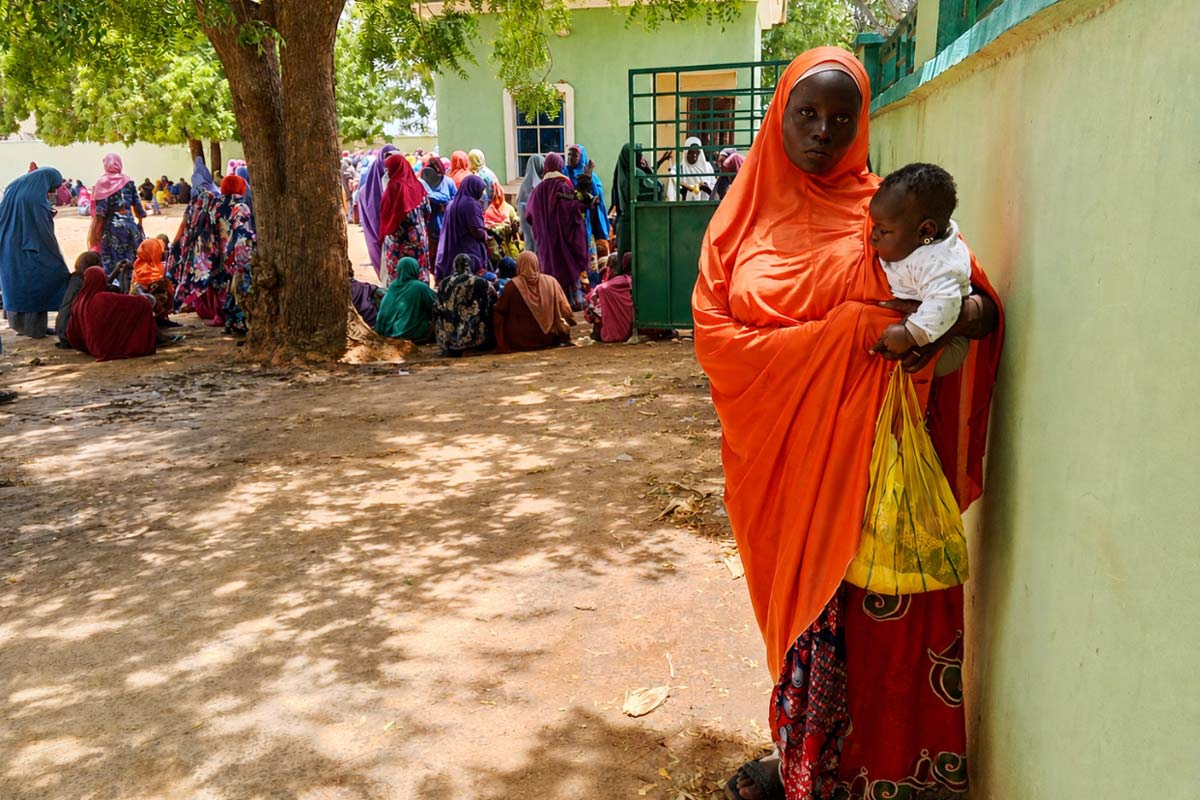
Aishatu Bala, a mother of four, says she was unhappy when her children missed vaccinations but now feels reassured when vaccination teams reach the community. Credit: Jesusegun Alagbe
Over the years, Rahama Isa had grown used to being cut off from healthcare. In Buni-Gari, her community in Yobe State’s Gujba Local Government Area, which lies in northeast Nigeria, terrorism had made the arrival of health workers a rare sight. The health facility in the community had been closed. But it alarmed her that her own children had missed out on their vaccines, while children in the area were falling sick with polio.
At some point in 2022, she saw a team of health workers at her doorstep, accompanied by several soldiers. “I could not fully describe the kind of relief I felt that day; it felt like having a cold shower in hot weather. I was very happy that healthcare had come to my doorstep,” she said
Since then, the soldier-chaperoned medical outreach visits have become something Isa looks forward to.
“I feel happy whenever I see the medical team arrive. I quickly gather my children for them without wasting time,” she said. The children receive their vaccines, sometimes with sweets from the health workers – a small gesture she says encourages the children to be ready for their next medical visit.
Vaccines amid volatility
Insecurity has not disappeared from Buni-Gari and surrounding communities in Gujba Local Government Area. Attacks by insurgents have continued to threaten lives and restrict movement, meaning it remains difficult for health workers to safely reach some settlements within the local government area
Kyari Mohammed, a security analyst in Damaturu, Yobe State capital, explained that Buni Gari and neighbouring areas like Buni Yadi sit close to the fringes of the Sambisa Forest, making them frequent targets for insurgent raids. The forest is a primary stronghold for insurgents of Boko Haram and its offshoots, he explained
“The areas have experienced a series of heightened, coordinated strikes targeting security outposts and civilian supply routes across Yobe’s Gujba axis,” Mohammed said
But as military operations are containing much of the violence across parts of the area, health teams are cautiously returning to communities that long struggled to access basic healthcare at all. Their journeys still require security escorts
A functional partnership between the health systems and the military has become critical to vaccine delivery. Dr Babagana Kundi Machina, the Executive Secretary of the Yobe State Primary Health Care Board (YSPHCB), alongside his counterpart from neighbouring Borno State, Professor Mohammed Arab Alhaji, recently paid a formal visit to Major General Abdulsalam Enesi Abubakar, the 15th Theatre Commander of the North-East Joint Task Force, Operation Hadin Kai, in a bid to strengthen that relationship.
Operation Hadin Kai is responsible for counterinsurgency and counterterrorism operations across Borno, Adamawa, and Yobe states
“The visit was also to appreciate the Nigerian military for its support in ensuring the delivery of essential life-saving health interventions, including immunisation, to hard-to-reach and inaccessible areas. In Yobe State, over 11,038 children in 232 settlements are planned to be reached with the support of the military. And Major General Abubakar assured of the military’s continued support,” Adamu Saidu Abba, spokesperson for YSPHCB said.

Two kinds of “frontline”
For the health workers who make these journeys, travelling under military escort has become part of the job
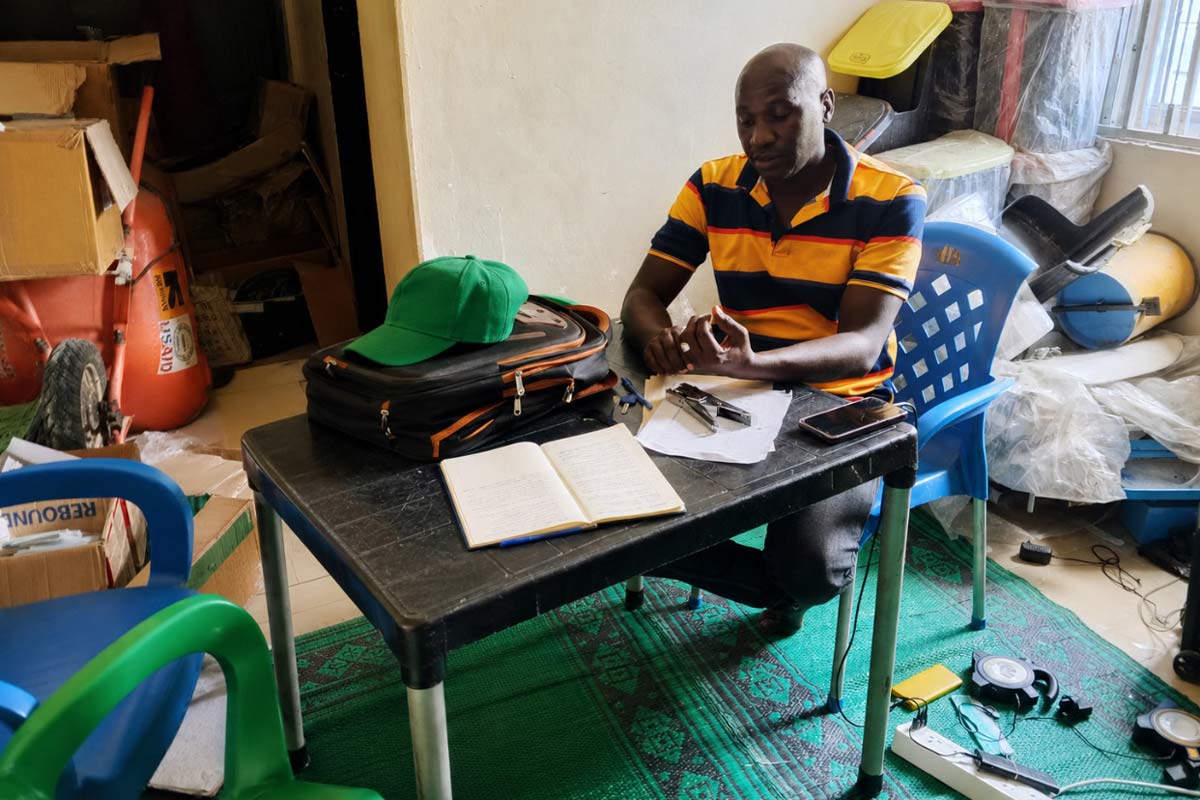
Abdulkarim Abdu, an immunisation officer at Buni-Gari Primary Healthcare Centre, has made several of these journeys within Buni-Gari and to neighbouring and border communities, including Gashua, Maza, Azare and Ganga Tilo
“I have lots of experience working with soldiers delivering vaccines to hard-to-reach places. Many of the soldiers have also been trained in vaccinating children because there are some very volatile situations where it’s only the soldiers that can enter the communities and immunise the children,” Abdu told VaccinesWork
Despite military protection, Abdu said when he and his colleagues set out to travel, they still feel anxious. “Yes, we feel fear and anxiety about what might happen, because insecurity still persists. But I love my work, and before departure for vaccination, I usually notice that everyone prays individually according to their faith. With no protective gear, prayer is our protection,” he said
The risks have not stopped the teams from delivering on their task. In August 2026 alone, at least 643 children had were vaccinated in Buni-Gari and other communities
Old strategies, new challenges
Military escorts for health workers are not entirely a new initiative in Yobe State. At the height of the insurgency, Nigeria, together with global partners like the World Health Organization (WHO), developed special approaches to reach children in conflict zones
Reaching Every Settlement (RES) began in October 2016, using civilian vaccinators accompanied by security escorts, such as local vigilantes, to reach partially accessible communities. Reaching Inaccessible Children (RIC), introduced in April 2017, went a step further, deploying military personnel trained in vaccination to reach settlements that civilian teams could not access
Today, that experience continues to shape how health workers reach children in communities such as Buni-Gari. Shettima Fannami, a senior team supervisor at the community’s primary healthcare centre, has experienced that evolution first-hand
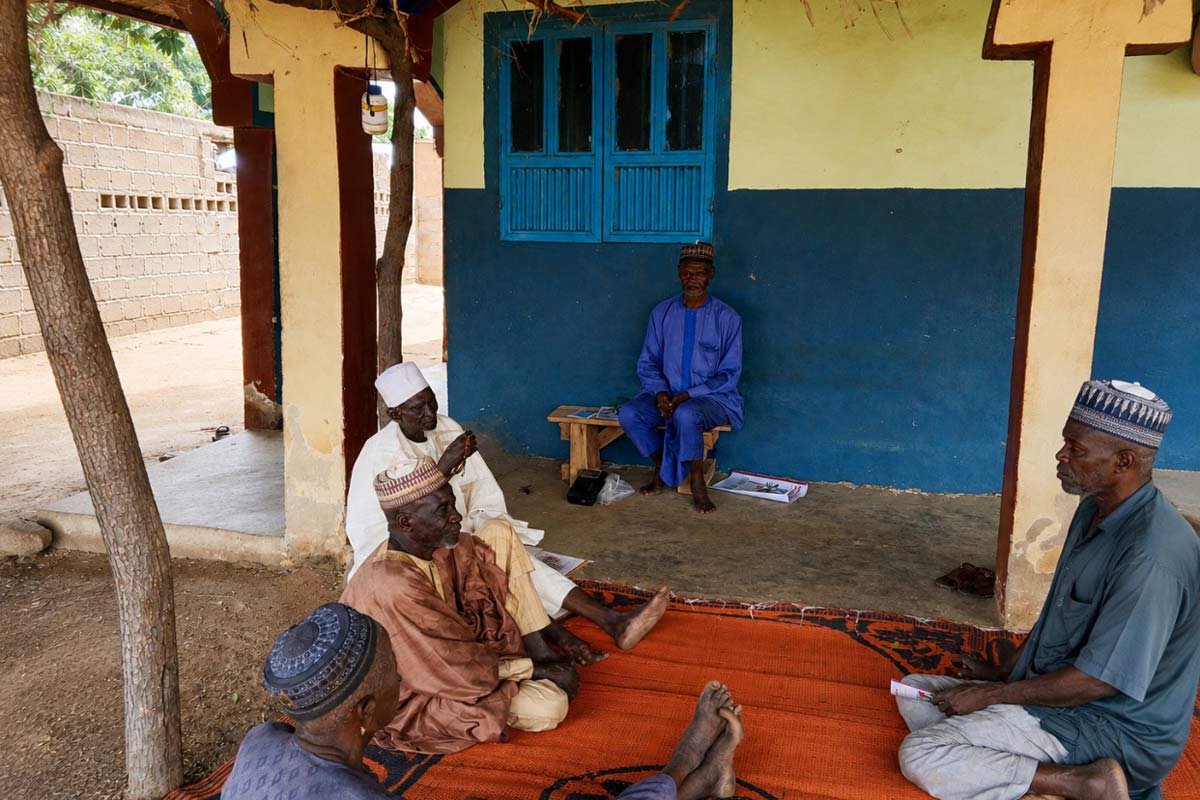
He said that today, health teams, usually consisting of a health worker, a vaccinator and a recorder, travel to different communities with soldiers. On arrival at a community, they establish contact with the community leaders, who help mobilise families and gather children at a central point. In some missions, Fannami said soldiers help assemble children for vaccination, allowing the teams to quickly immunise as many children as possible before leaving.
“The soldiers know the terrains and safer routes, and we often travel in military vehicles. At checkpoints, soldiers stop us and demand to see our mission orders before allowing us to proceed. On arrival at our destinations, parents feel secure when they see soldiers with us,” Fannami said
[Shettima Fannami, senior team supervisor, Buni-Gari Primary Healthcare Centre]
Asked what usually goes through his mind while making the trips, Fannami acknowledged that the journeys can be frightening, and said some health workers’ family members have sought their relatives’ transfers from insurgency-affected areas to safer places
“I’m definitely afraid of the hard-to-reach communities, even though it is my job to vaccinate the children there. Nevertheless, I can’t quit this job; I don’t know anything other than it,” he said
“My hope has come alive”
For Yarima Wakil, returning to Buni-Gari after spending many years in a host community meant starting over with little more than hope. Getting access to such essential res children missed their routine vaccinations
“I sometimes felt as if I was missing something when I realised that my children had not received their vaccines. On some occasions, I even searched for health workers myself to no avail. Now, things have changed. Vaccination teams come here about every three months
“The sight of soldiers arriving alongside the health workers usually assures us of safety. I even help our guests gather the children and serve them water. My hope has come alive and I feel happy whenever I see the vaccination teams,” he told VaccinesWork
For Aishatu Bala, the return of vaccination services to Buni-Gari represents an important change. Now a mother of four, Bala had two children when insurgents took over their community. Both of them missed several routine vaccines
“With the return of our relatives and the presence of the military, things are gradually changing. I don’t even need to wait for health teams to come to my doorstep before my children receive vaccines because the health facility is functioning again. I am also happy that the military escorts health teams to other remote places where our relatives live, so their children can also receive vaccines as mine now do,” she said.
“We don’t want this arrangement to ever stop because there are areas where Boko Haram still attacks from time to time,” said Alhaji Wakili Kayama, a representative of the Buni-Gari District Head, of the military escort system. “Our children need this to continue to protect them from many diseases.”
A mission beyond security
For Usman Aliyu, an intelligence operative with the 27 Task Force Brigade of the Nigerian Army in Buni-Gari, bringing the military together with the government and health workers has become an important part of restoring access to essential healthcare in communities affected by conflict
“There are challenges in this area, but helping civilians is something we always engage in. In my own specialisation, my role is almost humanitarian. I am always working with civilians, particularly the vigilante groups,” he said
Aliyu declined to discuss specific details of the military’s operations for security reasons. But he said the joint vaccination missions were producing results and winning the confidence of local residents
“The most important thing is that we are achieving results together. The community members are happy whenever they see us escort the health workers. They know their children are safe – not just from insurgents, but also from diseases,” he said
