


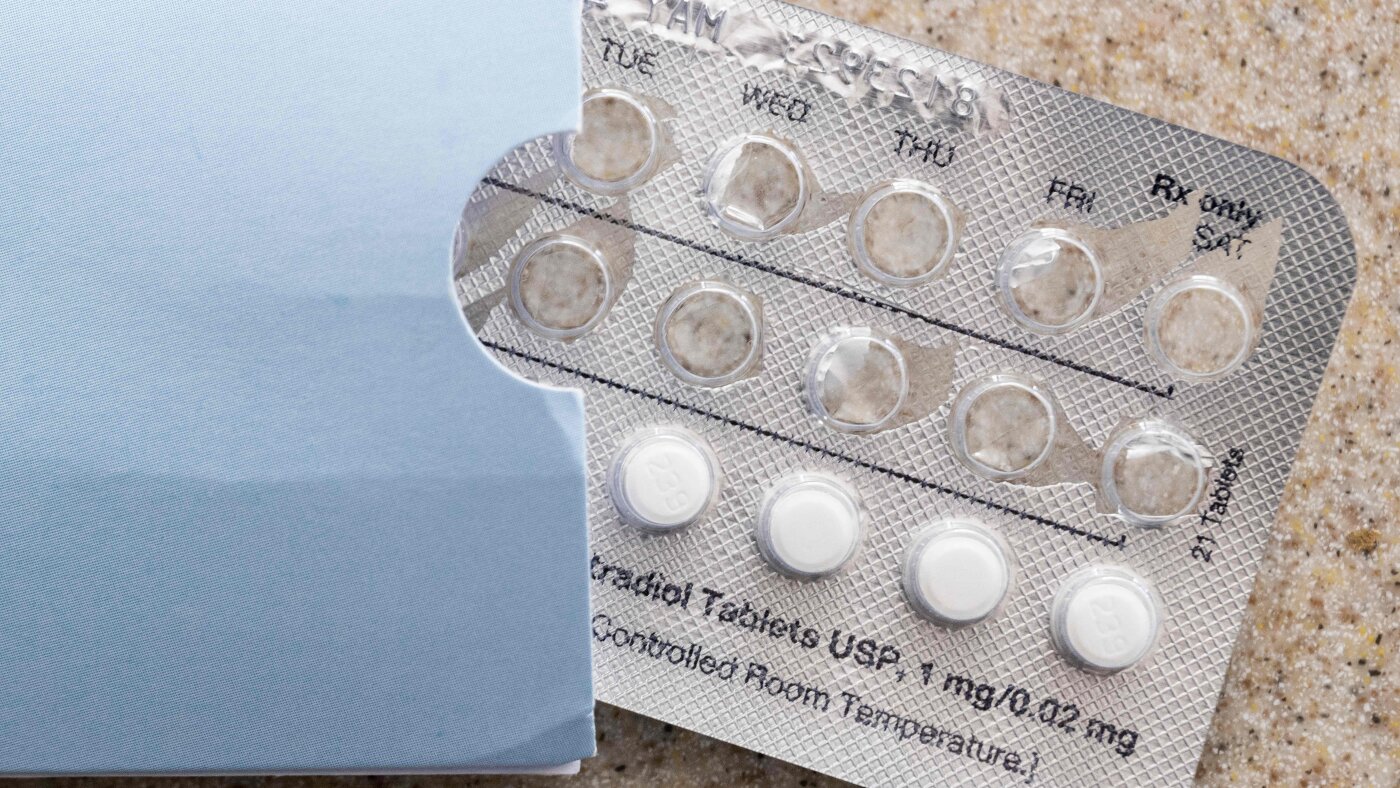
There’s a birth control backlash online. Can it explain the rise in abortions?
A chorus of influencers on social media in the MAHA and “trad wife” communities emphasize the downsides of hormonal birth control. Research shows few of them have medical expertise.
Jim Watson/AFP
toggle caption
Jim Watson/AFP via Getty Images
Stay up to date with our Up First newsletter, sent every weekday morning
Right after the Supreme Court overturned Roe v. Wade in 2022, there were many stories about how new state abortion bans were influencing people’s birth control decisions, especially by prompting people to use long-acting or permanent options
Research shows that it wasn’t just anecdotal, the trend was real — more people got intrauterine devices and implants for birth control, and procedures like vasectomies and tubal ligation spiked
Public Health
How ob-gyns are handling more requests for sterilization after ‘Roe’ was overturned
These days, though, Dr. Caitlin Bernard, an OB-GYN in Indianapolis who helps lead a statewide free birth control program, says her patients aren’t talking much about the abortion ban that’s been in place in the state for years
“This is just the normal status quo now,” says Bernard, who was involved in a high-profile abortion case soon after Roe was overturned. “Other things that help you decide whether or not to use contraception are more top of mind.”
Bernard says patients are questioning things like whether they would rather take a pill or have an IUD, and whether their insurance would cover both options. She also sees patients worried about finances in general and trying to avoid going to the doctor to steer clear of unexpected medical bills
Contraception “maligned”
Bernard says there is one thing that is affecting her patient’s decision-making more nowadays: Social media, and the rise of “Make America Healthy Again” and “trad wife” influencers. Both deliver messages about hormonal birth control being bad for women
Healthy or hype?
Influencers criticize birth control and push ‘natural’ methods. Here’s what to know
These types of videos are all over social media. While research shows that hormonal birth control options are safe and that they’re effective at preventing pregnancy, many of these videos exaggerate potential side effects and minimize the downsides of non-hormonal birth control options. Most are posted by people who aren’t medical professionals
“There is definitely a social media phenomenon of <a href="https://lumeamara.online/?p=5250" title="This luxury London hotel is the ultimate family wellness stay”>wellness influencers with non-evidence-based personal experiences that are just ricocheting through the stratosphere,” says Cynthia Harper, a contraception researcher at the University of California San Francisco. “That’s overlapping with ideology and policy that women are supposed to be at home having a lot of babies, young,” she says, referring to the pronatalist movement.
“These two things have come together and contraception has never been so maligned,” she says
Harper adds that there are also political forces working against birth control access. The Trump administration has cut fundingfor reproductive health providers across the country, and for the health system more broadly. Harper says those things have an impact. “Everything I see points to lower access to contraception,” she says
A twist after abortion bans: More abortions
Surprisingly, the number of abortions has actually gone up in the last few years as states have enacted bans
Could it be that the cultural push against birth control is leading to more unplanned or unwanted pregnancies and therefore more abortions?
Harper thinks it’s an intriguing hypothesis. To test if out, you’d have to do a study to survey people accessing abortion, she says, “and ask if it was the restricted access to contraception that was the reason for the pregnancy that they’re seeking abortion care for.”
Health
Trump administration abruptly cancels grants for teen pregnancy prevention
Brittni Frederiksen, a women’s health police researcher at the nonpartisan organization KFF, does not think that shifts in birth control use explains recent abortion numbers. “I actually think the number of abortions going up is likely just due to increased abortion accessibility, particularly with telehealth medication abortions,” she says
In telehealth medication abortion, patients are able to get abortion pills from a pharmacy or in the mail after a telehealth visit. It has grown dramatically in popularity since becoming available during the COVID-19 pandemic. Right now, a high-profile legal case from Louisiana aims to remove that option for patients all over the country
As for the effect abortion bans have had on birth control? Frederiksen points to the women’s health survey KFF conducts every two years that asks about birth control use
“In 2024, 82% of sexually active reproductive age women were using contraception. 6% were not using contraception,” she says. The rest were pregnant, trying to get pregnant or unable to conceive
KFF just fielded the survey again this year. “I have given a brief look at the 2026 data, and it looks like the shares using contraception are pretty similar,” she says
Frederiksen says cultural attitudes towards birth control and political forces are changing, and funding cuts that affect access are happening, though perhaps in ways that aren’t visible in the data yet
