


- Home
- Middle East
- Why battered Gaza’s premature babies face a struggle beyond survival
Why battered Gaza’s premature babies face a struggle beyond survival
Short Url:
15 Sep 2026 16:39:02 GMT9
- UNICEF links rising premature births in the enclave to malnutrition, unsafe conditions and maternal stress
- With just 18 hospitals partly functioning in Gaza, children face shortages and lasting health consequences
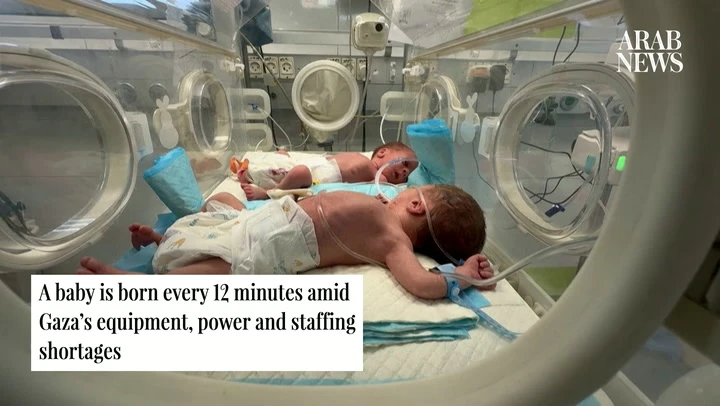
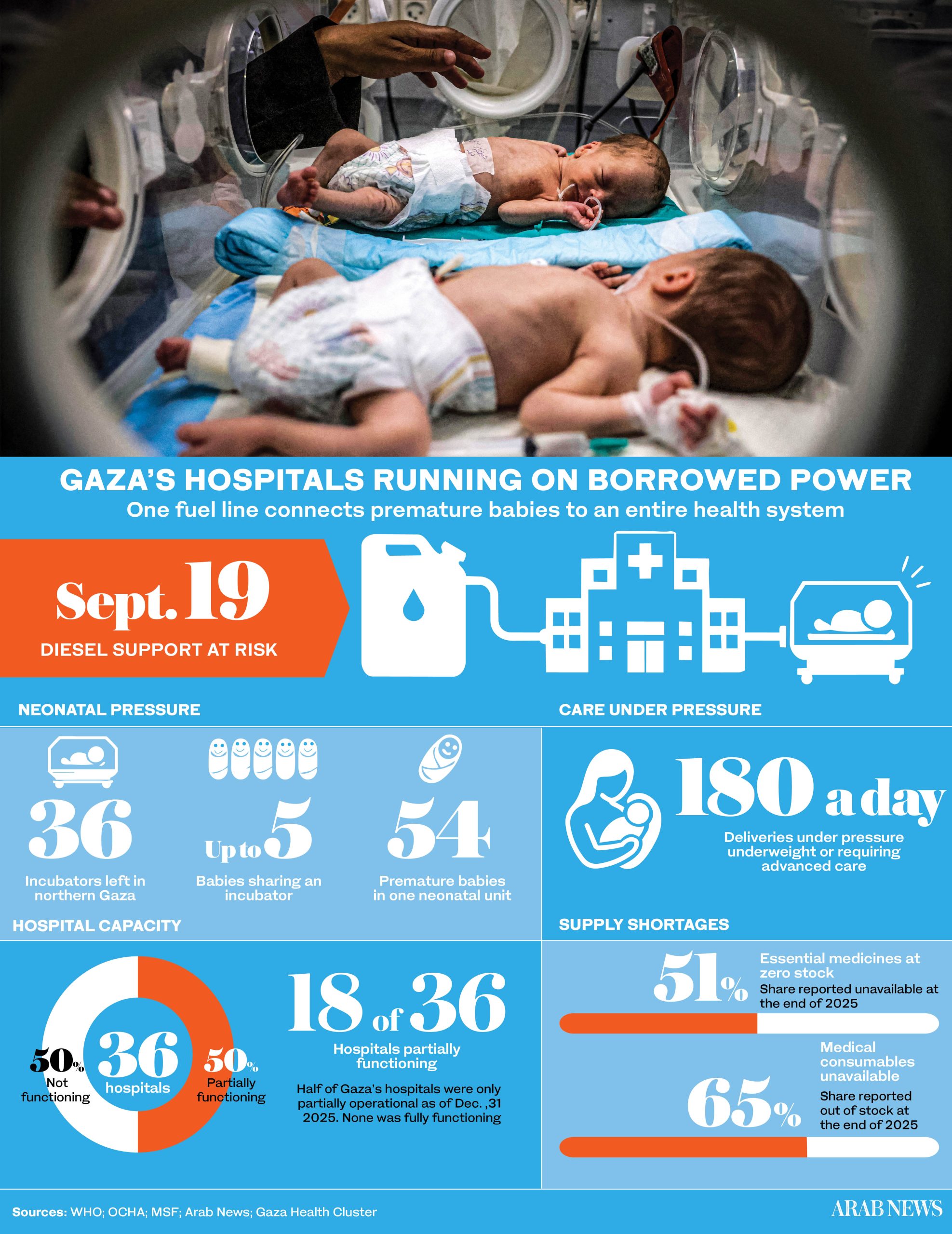
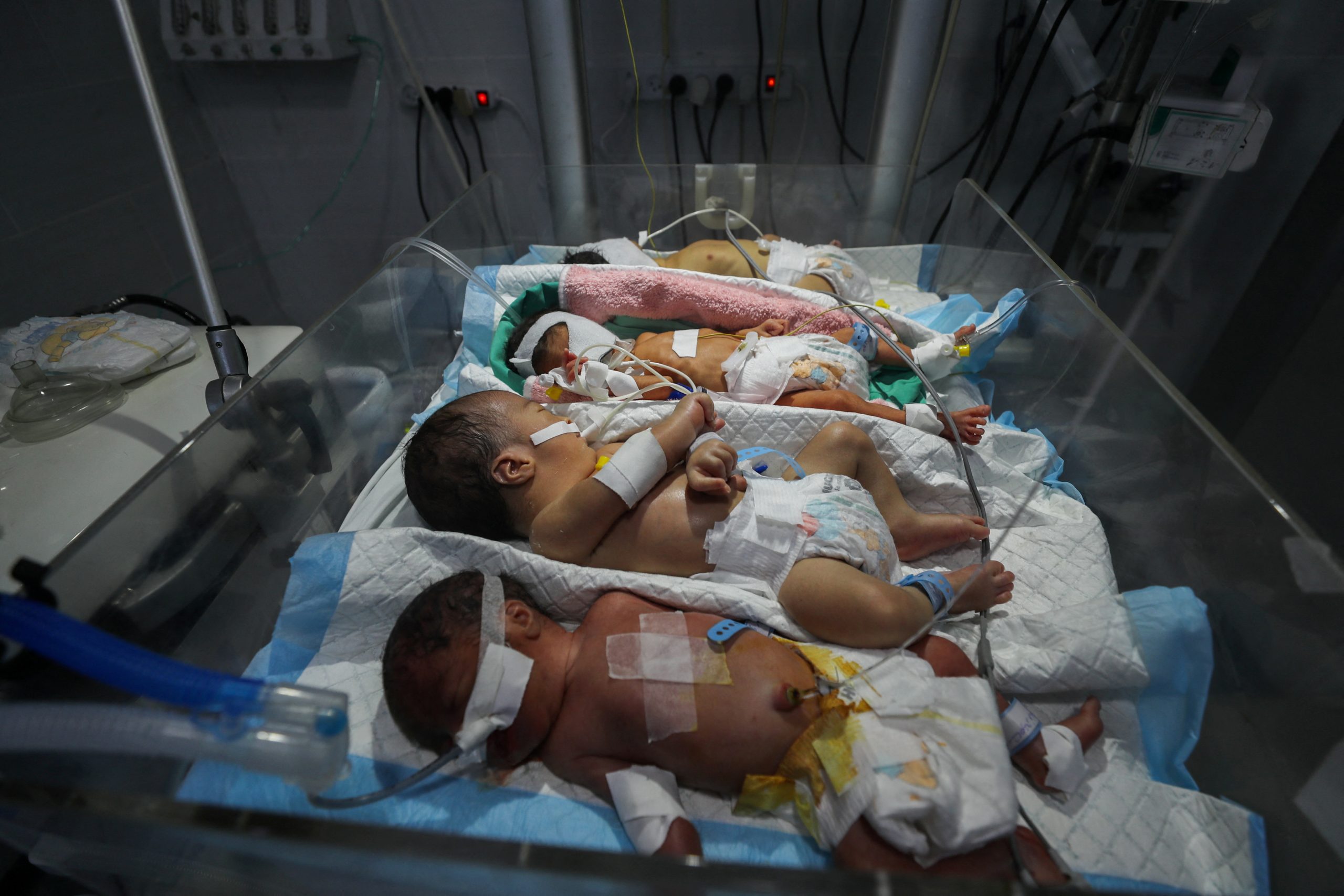
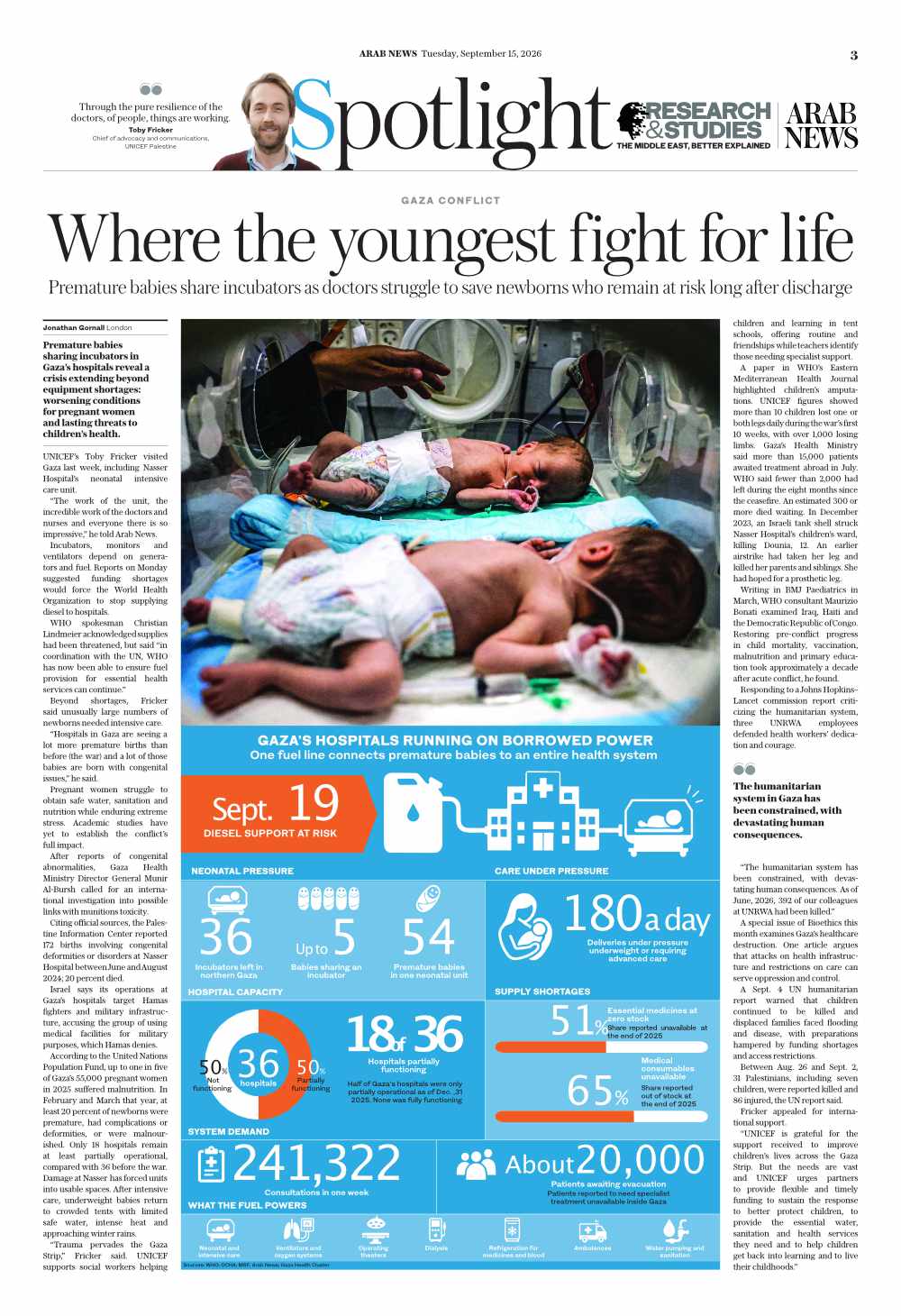
LONDON: For any neonatal intensive care physician, the sight of three or more premature babies sharing a single incubator is cause enough for alarm
There is, without doubt, a shortage of incubators, and many other things, in Gaza’s hospitals
But behind the heartbreaking photographs emerging this week from the front line of Gaza’s battered healthcare system’s fight to save the most innocent victims of Israel’s war since October 2023 lies a broader crisis, UNICEF’s Toby Fricker said
Fricker, the East Jerusalem-based head of advocacy and communications for UNICEF Palestine, spent last week in Gaza, visiting many of the organization’s children’s programs, in Beit Lahia, Deir Al-Balah and Khan Younis, including the neonatal intensive care unit at Nasser hospital
“The work of the unit, the incredible work of the doctors and nurses and everyone there is so impressive,” he told Arab News
“Thankfully, we’ve been able to provide at least a number of the incubators and ventilators to support the facility, which is full to the brink and working round the clock
“Sometimes babies are sharing an incubator, at least the ones who are not in critical condition, and then they have another room where they’re able to provide feeding for the babies that have come out of intensive care and are more stable and improving.”
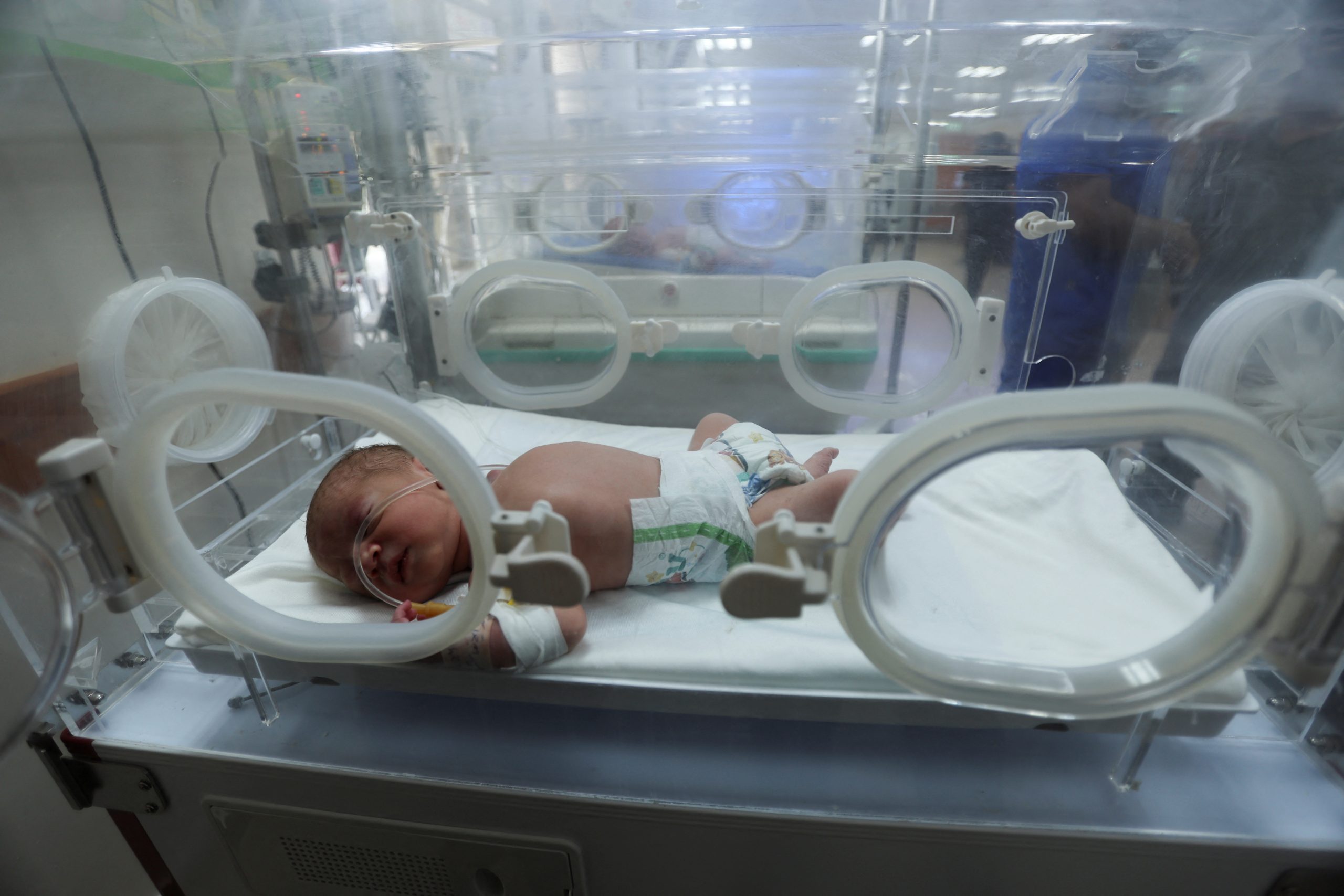
Incubators and other vital medical equipment, including monitors and ventilators, rely on electricity, which in Gaza’s current situation has created a dependency on generators — and the fuel that powers them
On Monday reports began to circulate that the World Health Organization had announced that because of a shortfall in funding it was going to have to stop supplying diesel to hospitals in Gaza
As a WHO response to Arab News yesterday made clear, there had been a threat to supplies
But for now, said Christian Lindmeier, a spokesman for the organization, “in coordination with the UN, WHO has now been able to ensure fuel provision for essential health services can continue.”
“WHO will continue supporting efforts by other UN agencies to sustain fuel provision, enabling WHO to concentrate on delivering essential medical supplies,” he said
For now, at least,the incubatorswill continue to function. But in addition to the shortage of these pieces of equipment that can spell the difference between life and death for premature babies, Fricker said that it was the unusually large number of babies that needed them that was ringing alarm bells among health professionals working in Gaza
“Hospitals in Gaza are seeing a lot more premature births than before (the war) and a lot of those babies are born with congenital issues,” he said
“The hospitals are doing amazing work for the newborns and premature infants and they are saving a lot of very young lives
“But environmentally, the impact on pregnant women in Gaza is massive, in terms of the struggle to get access to safe water, good sanitation, proper nutrition and all the conditions you need to have a healthy pregnancy.”
Fricker used to work with UNICEF in Ukraine, “and we saw there a rise in premature births because of more restricted access to essential services and the added stress on pregnant women.”
It is still too early for academic studies to reveal the extent of the impact of the conflict on the health of pregnant women and their babies but some anecdotal horror stories have emerged
In May last year distressing photographs were released by the Palestine Information Center of a child born at Al-Awda hospital in northern Gaza without a brain and with severe deformities
In a social media post at the time Dr. Munir Al-Bursh, director general of the Ministry of Health in Gaza, described the case of the 2-day-old child as just one of an increasing number of “shocking cases of deformities.”
He called for an international investigation into whether there was any link between congenital defects and the potential toxicity of the munitions used by the Israelis
Quoting official ne and August 2024 172 children had been born at Nasser Hospital “with congenital deformities or disorders,” of whom 20 percent died
According to statistics from the United Nations Population Fund, up to one in five of Gaza’s 55,000 pregnant women in 2025 suffered from malnutrition, leading in many cases to high-risk pregnancies
In February and March 2025 at least 20 percent of newborns in Gaza were either born premature, with complications or deformities, or malnourished
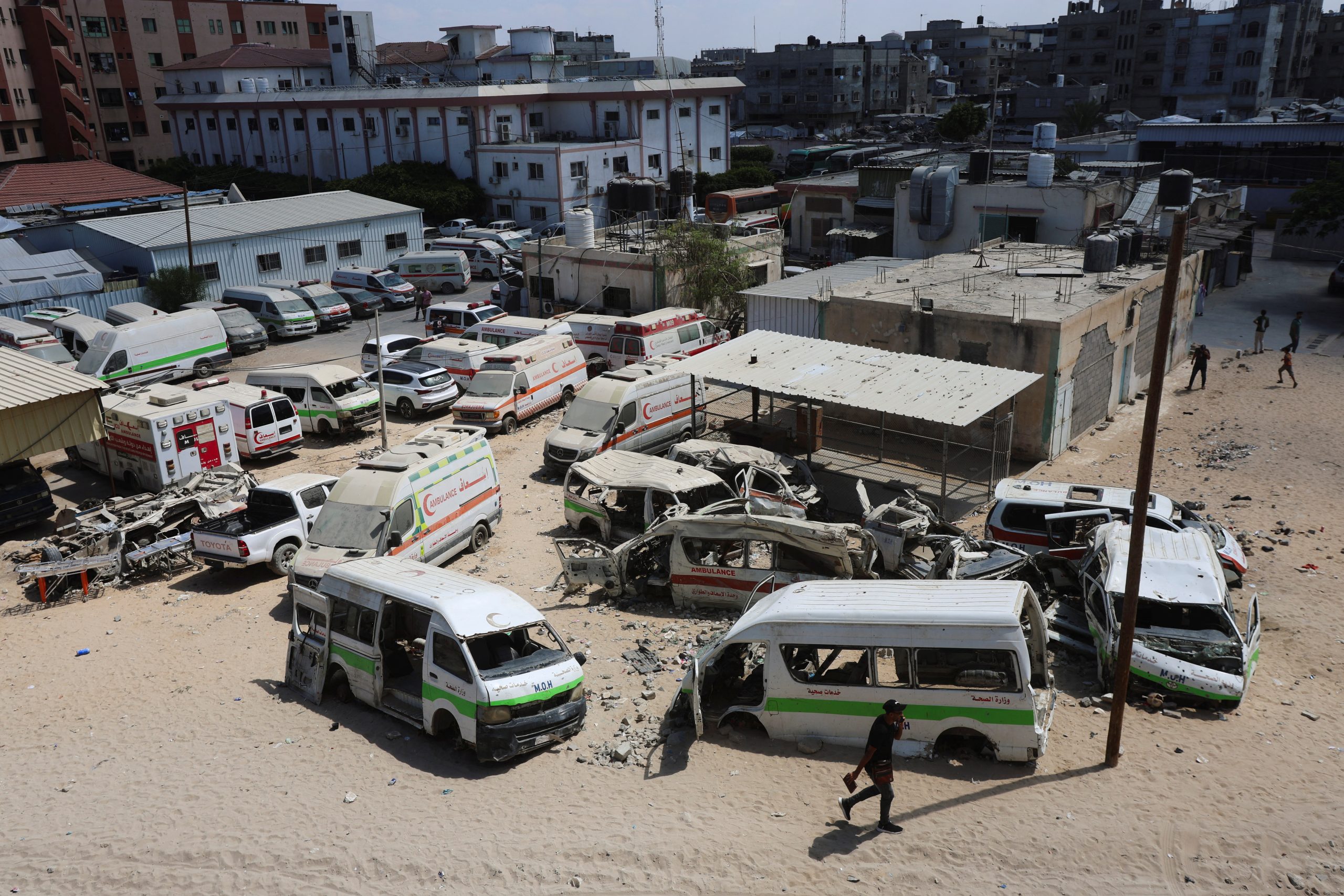
Like many of Gaza’s hospitals — the 18 that are still at least partially operational,that is, compared with the 36 that existed before the war — facilities at the Nasser Hospital in Khan Younis have been damaged and staff have had to move units, including neonatal intensive care, into whatever spaces can still be used
Fricker said that even when premature children survived their poor start in life and graduated from the critical care units, their fight for a normal, healthy life was far from over
“Here in the Gaza Strip, it’s incredibly difficult,” he said
“The children can come through the units, they’re fed properly and then they’re released. But for the parents there is still the challenge of having to bring up a very young child, who’s probably underweight and needs a lot of support, in the conditions that people are living in, in tents in very crowded conditions and with limited access to safe water.”
At the moment, those tents “are boiling hot,” he said. “And then of course we have the concern over the winter rains coming soon and the impact that will have on living conditions across the Gaza Strip.”
UNICEF is also keenly aware of the potential for a long-term mental health crisis among children who have grown up in such traumatic circumstances
“Trauma pervades theGaza Strip,” Fricker said. “Pretty much every childhas been impacted by some form of traumaand really needs some form of support— this is another massive issue
“UNICEF works withsocial workers who provide support tochildren who are injured, andothers as well, and wearecurrently working on getting children back into learningat the start of the school year in Gaza
“This is not only about a child’s rightto education, it’s also about thesort of routine,normalcyandstability thataschool can provide.”
Many schools have been destroyed but with UNICEF’s support replacements are springing up in tents, often in the yards of schools that have been damaged
“This is givingchildren some structured learning and some structured fun activities, the chanceto be with their friends, to be with teachers, which really does support their mental well-being as well,”Fricker said
“Atthe same time we are able to workwith teachers to be able to identify children who might need more specialized support and can refer them to other organizations or to social workers who are working in the Gaza Strip
“That’sreally a massively important part of our work with partners on the ground,providing some sort of an everyday childhood experience and trying tosupport children who have lived through so much that theyshouldn’t have.”
Last year a paper published in the WHO’s Eastern Mediterranean Health Journal focused on a very particular aspect of the suffering of Gaza’s children, on whom “the impact … has been catastrophic” — those who have “been caught in the crossfire and have become victims of traumatic injuries, resulting in limb amputations.”
The authors, from the pediatrics outpatient department at Hamad Medical Corp. in Doha, said that these young survivors “now face profound physical, emotional and psychological challenges in a community already burdened by the impact of conflicts.”
The shocking statistic revealed by the paper, and authenticated by figures from UNICEF, is that in the first 10 weeks of the war “more than 10 children in Gaza lost one or both legs each day, and over 1,000 have lost limbs since the current conflict began in October 2023.”
Given the lack of supplies and equipment, there is only so much Gaza’s hospitals can do for many patients who require specialist treatment that is currently only available abroad
According to Gaza’s health ministry, in July more than 15,000 patients were awaiting treatment abroad for conditions ranging from cancer to war wounds
The WHO said at the time that in the eight months since the ceasefire fewer than 2,000 people had been able to leave Gaza for treatment.Waiting has proved fatal for an estimated 300 or more patients who died before they could travel for help
Some stories have been particularly heartbreaking
In December 2023 an Israeli tank shell hit a children’s ward atNasser Hospital in Khan Younis, killing Dounia, a 12-year-old girl who had lost a leg in an earlier airstrike that had killed her mother, father, brother and sister. Dounia had been hoping to receive a prosthetic leg
Even if the hostilities ended tomorrow, health experts believe it will take many years for Gaza’s healthcare system to fully recover
Maurizio Bonati,a WHO consultant andformer head of the Laboratory for Maternal and Child Health at the Mario Negri Institute in Milan, posed a telling question in a paper published in March in the journal BMJ Paediatrics: “What will happen to the surviving children once hostilities are suspended?”
For an answer he looked at the healthcare outcomes of three previous conflicts — in Iraq, Haiti and the Democratic Republic of Congo
He said that what he found was that “after the acute phase of an armed conflict it takes approximately 10 years to restore, maintain and resume the trends in improvement in the under-5 mortality rate, in rates of vaccination coverage, wasted children and completion of primary education to pre-conflict levels.”
Following the publication in May of a report by The Johns Hopkins Center for Humanitarian Health–Lancet Commission, which argued that the current global humanitarian system was “no longer fit for purpose,” three employees of the UN Relief and Works Agency for Palestine Refugees in the Near East responded with a letter to The Lancet
Gaza, they wrote, was “the clearest example” of the challenge for the humanitarian system.”
“The humanitarian catastrophe has gone beyond anything most of us could have imagined. For those who knew Gaza before the war began on Oct. 7, 2023 the scale of destruction and human suffering would have been inconceivable. It is difficult to argue that humanitarian action has achieved the outcomes that the people of Gaza deserve.”
But the failure to deliver those outcomes, they said, “should not be interpreted as a failure of humanitarian workers.”
“We have witnessed in Gaza the commitment, dedication, innovation and courage of health workers. The problem lies beyond the humanitarian workforce
“The humanitarian system has been constrained, with devastating human consequences. As of June, 2026, 392 of our colleagues at UNRWA had been killed.”
The destruction of Gaza’s healthcare system is the subject of a special issue this month of the journal Bioethics. One of the articles argues that “Israel’s destruction … of Palestinian health systems … should be understood as an instance of ‘necropolitics,’” in which “power is exercised through the systematic exposure of a population to death.”
Access to health systems, the authors said, “is a core determinant of a person’s health and well-being and control of health systems is key to national sovereignty.”
“Those seeking to control, oppress or eliminate ‘threatening’ or ‘undesirable’ populations can achieve this end by attacking health infrastructure and restricting access to healthcare services
“By reducing Palestinians to death-like living conditions through the destruction … of health infrastructure, Israel optimizes its control over the remaining population of Gaza.”
Israel says its operations at Gaza’s hospitals target Hamas fighters and military infrastructure, accusing the group of using medical facilities for military purposes and civilians as human shields. Hamas denies using hospitals for military purposes
According to the most recent Humanitarian Situation Report by the UN Office for the Coordination of Humanitarian Affairs, published on Sept. 4, “children continue to be killed by airstrikes and other attacks affecting populated areas in the Gaza Strip” and “most of Gaza’s 2.1 million are approaching the rainy season in overcrowded displacement sites, at risk of flooding and disease, while efforts to help them prepare are constrained by funding shortfalls and access restrictions.”
Between Aug. 26 and Sept. 2, 31 Palestinians, including seven children, were reported killed and 86 injured
Fricker said that in Gaza there was now an urgent need for funding from the international community
“UNICEF is grateful for the support received to improve children’s lives across the Gaza Strip. But theneeds are vast and UNICEF urges partners to provide flexible and timely funding to sustain the response to better protect children, to provide the essential water, sanitation and health services they need and to help children get back into learning and to live their childhoods.”
Related Articles

Trump will handle Bab Al-Mandab situation ‘calmly and wisely,’ says advisor
UN Security Council to meet Tuesday to discuss Bab al-Mandab: diplomatic sources
Fighting continues along Yemen’s western front
Netanyahu threatens retaliation if Israel’s enemies attack
