


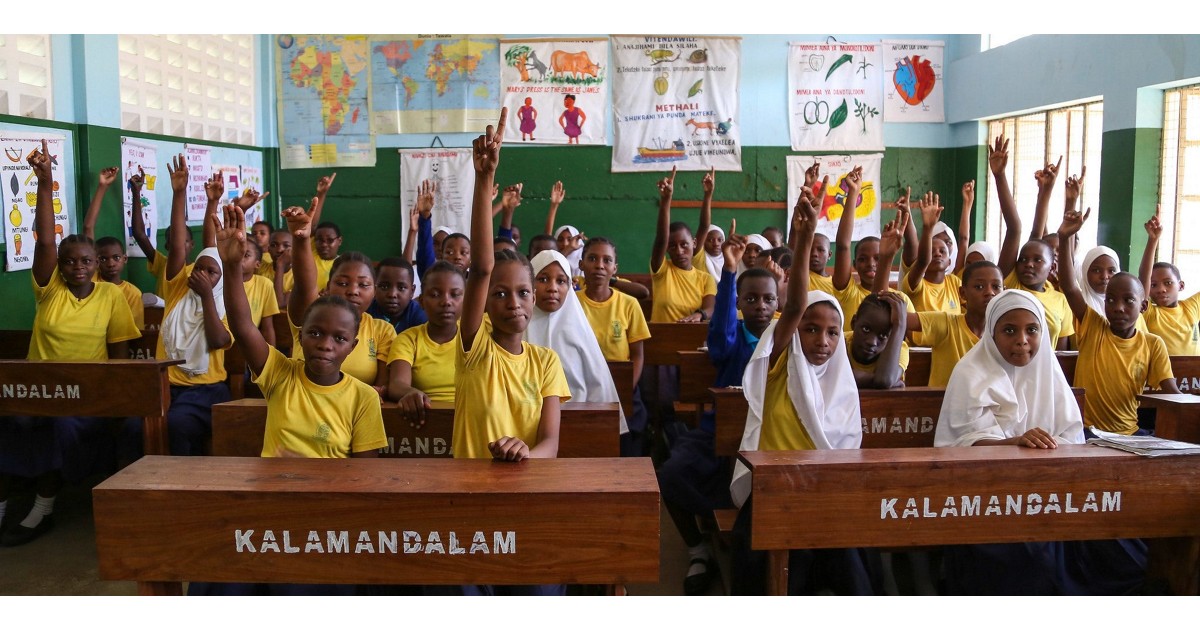
Safe schools help children learn, recover, and thrive despite adversity.
From prenatal exposure through early childhood, the school years and into early adulthood, violence in all its shapes or forms ripples through a child’s biology, psychology, relationships, and life opportunities in ways that can persist for decades. A kindergarten teacher once told me about a boy who flinched every time a chair scraped the floor, the way you do when your body remembers something your mind hasn’t caught up to yet. It took her months to realize the sound reminded him of furniture being thrown at home. Violence doesn’t wait for a child to grow up before it starts shaping them.
Before Birth
Before birth, severe maternal stress (from war, an abusive partner, or displacement) reaches the developing brain, affecting the parts that govern fear, memory, and self-control. Studies from Pakistan, Gaza, Bosnia, Brazil, and the Democratic Republic of Congo converge on the same pattern: mothers under extreme hardship have more preterm and low birth weight babies, who carry a higher risk of having difficulties learning and mental health problems for the rest of their lives. Up to 12 percent of pregnant women in high-income countries, and up to 28 percent in some lower-income settings, experience physical or sexual violence during pregnancy.
The Early Years & The Home Environment
The first years of a child’s life run almost entirely through one relationship: the caregiver. A parent dealing with anxiety, depression, or trauma, becomes less emotionally available, less attentive to a child’s cues and less able to make the child feel safe. When the person who should be a source of comfort is also a source of fear, children carry it forward, into relationships, into risk-taking, sometimes perpetrating intimate partner violence as adults. Economic disruption compounds this: poverty erodes parental capacity, and domestic violence is simultaneously a cause and consequence of poverty.
The School Years
Attacks in schools disproportionately push girls out entirely. When a girl drops out, the consequences follow her: she is more likely to marry young, and early marriage is itself linked to higher rates of intimate partner violence throughout her life, and long-term economic dependence, as documented in Nigeria and Afghanistan. For boys, the risk takes a different shape. Economic necessity, coercion, the desire to belong, and the internalization of violence as masculine power all drive recruitment into armed groups. This could be sometimes forced, sometimes not, and often somewhere in between. For children left with physical disabilities from violence, barriers to basic services, loss of mobility, and in displacement settings, a near-invisible status leaves them behind even in humanitarian response.
Adolescence
Adolescence brings its own challenges, with greater sensitivity to peer influence, while judgment and self-control capabilities are still developing. It is often when earlier exposure becomes visible: the first depressive episodes, entry into violent peer groups, or first experiences of intimate partner violence
What Actually Helps
Over time, conflict and violence damage children through two overlapping but distinct pathways:
The first is psychosocial and neuro-cognitive stress — the effect of living under fear, unpredictability, or extreme deprivation on a developing brain, independent of any direct physical harm. Mental health in conflict-affected populations is not a transitory byproduct of emergencies. In some conflict-affected communities, up to 90 percent of children show signs of PTSD, with girls consistently affected at higher rates. Holocaust survivors showed persistent PTSD symptoms 40 years after childhood exposure. Childhood violence raises adult rates of heart disease and cancer, and cuts life expectancy. Trauma also crosses generations: adult children of Vietnam War veterans were 1.54 times more likely to be diagnosed with anxiety and 1.77 times more likely to be diagnosed with depression — nearly 40 years after the war ended.
The second pathway is direct physical violence, sexual violence, physical assault, domestic violence witnessed or experienced, and the injury, disability, and trauma these produce. Girls in conflict settings face acute risk of sexual violence, particularly during displacement, which can lead to unwanted pregnancy, HIV, and forced early marriage. Fragile, conflict-affected or violent settings also reinforce harmful norms around masculinity, violence, and dominance, norms that outlast the conflict itself.
For psychosocial and neuro-cognitive harm, the strongest protective factor across every setting studied is a stable, responsive relationship with a caring adult. Colombia’s Semillas de Apego program demonstrated that caregivers could be measurably transformed (more attuned, more responsive, more present) even in some of the country’s most violent municipalities, with lasting improvements in children’s mental health eight months after the program ended. But it also showed limits: for caregivers in extreme poverty, the effects weakened, which is a clear argument for pairing psychosocial support with economic transfers rather than treating them as separate tracks. Both parenting programs and cash transfers (direct cash payments to families) have shown to meaningfully reduce violent punishment and improve children’s long-term outcomes, and they work better together.
For direct physical violence, community-level support follows the same logic. Women’s groups have been shown to reduce depression in new mothers in Tanzania, Uganda and India. In theSahel, life skills training and community sessions for women improved mental health, life satisfaction, and social connections, especially when combined with cash transfers. These supports are valuable, but they are not a replacement for direct clinical care for the child.
For many children, schools when they function well, can function as protective environments: Colombia’s PROMISE program pairs violence monitoring with prevention of gender-based violence and cyberbullying. In Uganda and Papua New Guinea, conflict-resolution training is embedded in teacher preparation. Teachers are often the adults who see children most consistently outside the home, making them critical to children’s safety, well-being, and ability to recover from violence and adversity. Supporting teachers themselves—with training, psychosocial support, and safe working conditions—is therefore essential: they cannot be expected to protect and support children if they are themselves overwhelmed or exposed to violence. Across Latin America and the Caribbean, violence prevention toolkits guide schools and communities on safe school design. Psychosocial and play-based interventions, deliverable even by non-specialist workers, show consistent benefits for children in fragile, conflict-, and violence-affected settings. And for girls, staying in school through adolescence is itself among the strongest protections against early marriage and gender-based violence.
As learned from Ukraine and elsewhere, human capital investments cannot wait for peace. Education and psychosocial support are integral to resilience-building, a central pillar of both humanitarian response and long-term development: in the caregiver relationship, in the protection of physical safety, and in keeping children learning. The task is to invest in all three, specifically enough that the investment actually reaches what it is meant to fix.
Children have extraordinary adaptive capacities, but they are not invulnerable. The evidence doesn’t just describe how violence damages children; it identifies where to act: in the relationship with a caregiver, in the protection of physical safety, classroom, in in children themselves. The task ahead is to translate this understanding into sustained investment in prevention, protection, and support, and never to use children’s resilience as a reason to tolerate the conditions that force it.
This ispart of a seriesexamining human capital measurement in fragile and conflict-affected settings
